Overview
British Aerospace plc was created in April 1977 by the nationalisation and merger of the British Aircraft Corporation, Hawker Siddeley Aviation and Dynamics, and Scottish Aviation — consolidating roughly ninety percent of Britain's aerospace industry into a single state-owned champion. Privatised in 1981, BAe grew into Europe's largest defense and aerospace company of its era.
Its product list defined late-Cold War aviation: the Sea Harrier and Harrier II jump jets, the multi-national Panavia Tornado strike aircraft, the Hawk advanced jet trainer — still the mount of the Red Arrows and dozens of air forces — and the BAe 146 regional airliner family. In space, BAe built satellites and contributed to major European programmes, while its work on what became Eurofighter laid the foundation for today's Typhoon.
In November 1999, BAe merged with GEC's Marconi Electronic Systems to form BAE Systems — closing the chapter on the British Aerospace name but carrying its programmes, factories, and engineering culture into what is today the UK's largest defense contractor.
Focus Areas
Harrier Family
The Sea Harrier and Harrier II V/STOL jump jets — icons of the Falklands era and the foundation of modern short-takeoff combat aviation.
Panavia Tornado
The swing-wing strike and interceptor family built with German and Italian partners — NATO's low-level strike backbone for three decades.
Hawk Trainer
The advanced jet trainer chosen by the Red Arrows and air forces worldwide — still in production lineage with BAE Systems today.
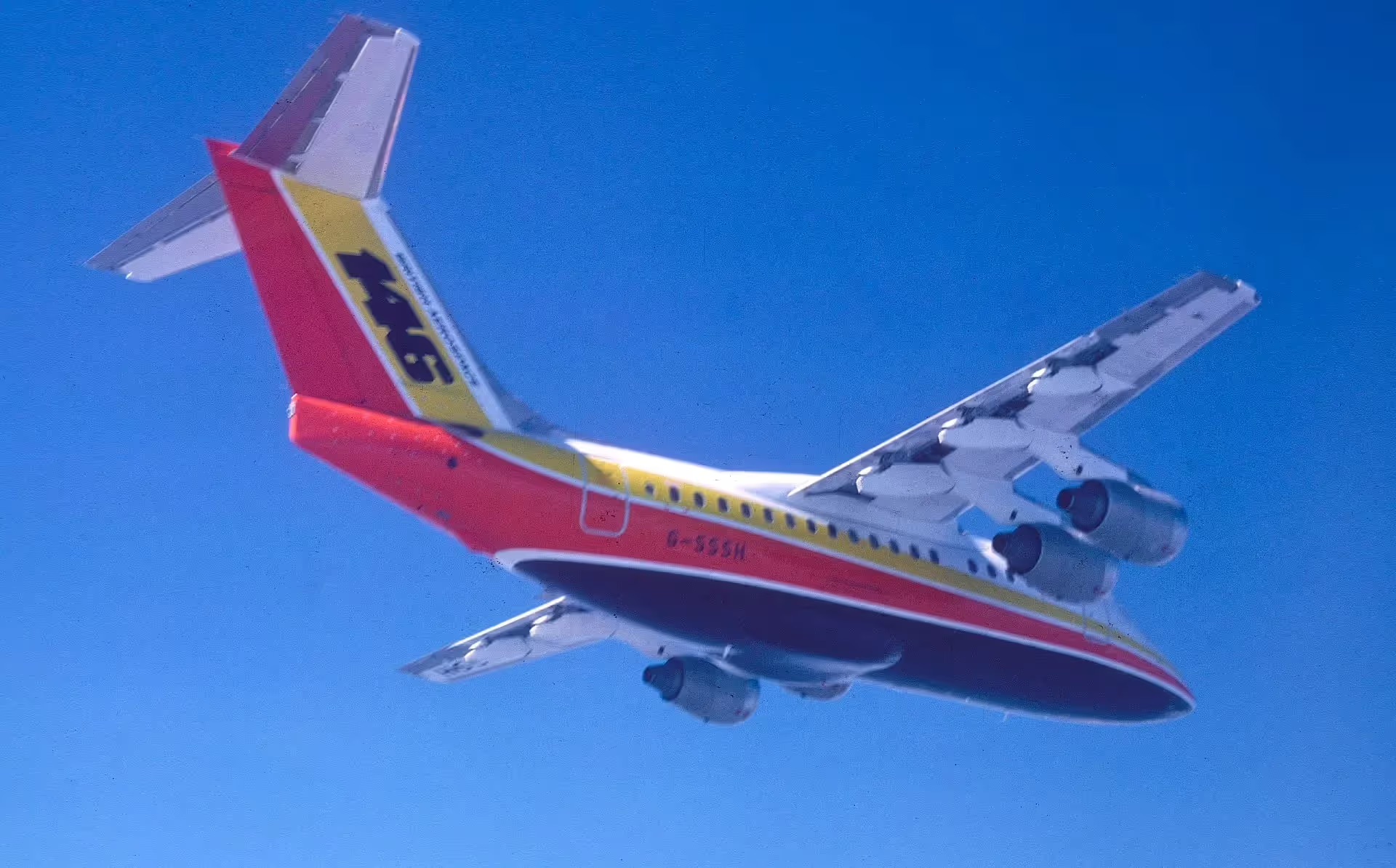
BAe 146 & ATP
The quiet regional airliner and turboprop family that served city-centre airports across Europe for two decades.
Space Systems
Satellites and European space programmes — the heritage that fed into today's Airbus and Astrium lineages.