
July 2026 was a month of firsts and farewells. China caught a Long March 10B booster on a sea net — becoming the second nation to recover an orbital stage. India's Vikram-1 reached orbit, making it the third nation with private launch. Starship returned to flight on its 13th test. Pegasus XL flew its final mission, ending the orbital air-launch era. Farnborough returned with Boeing orders and a flying-taxi debut. The Navy revealed the "Malice" missile, eight NATO allies launched the HALO constellation, and Anthropic shipped Claude Opus 5 — even as the Air Force ordered its models purged from defence systems. Read on for the details.
Aviation
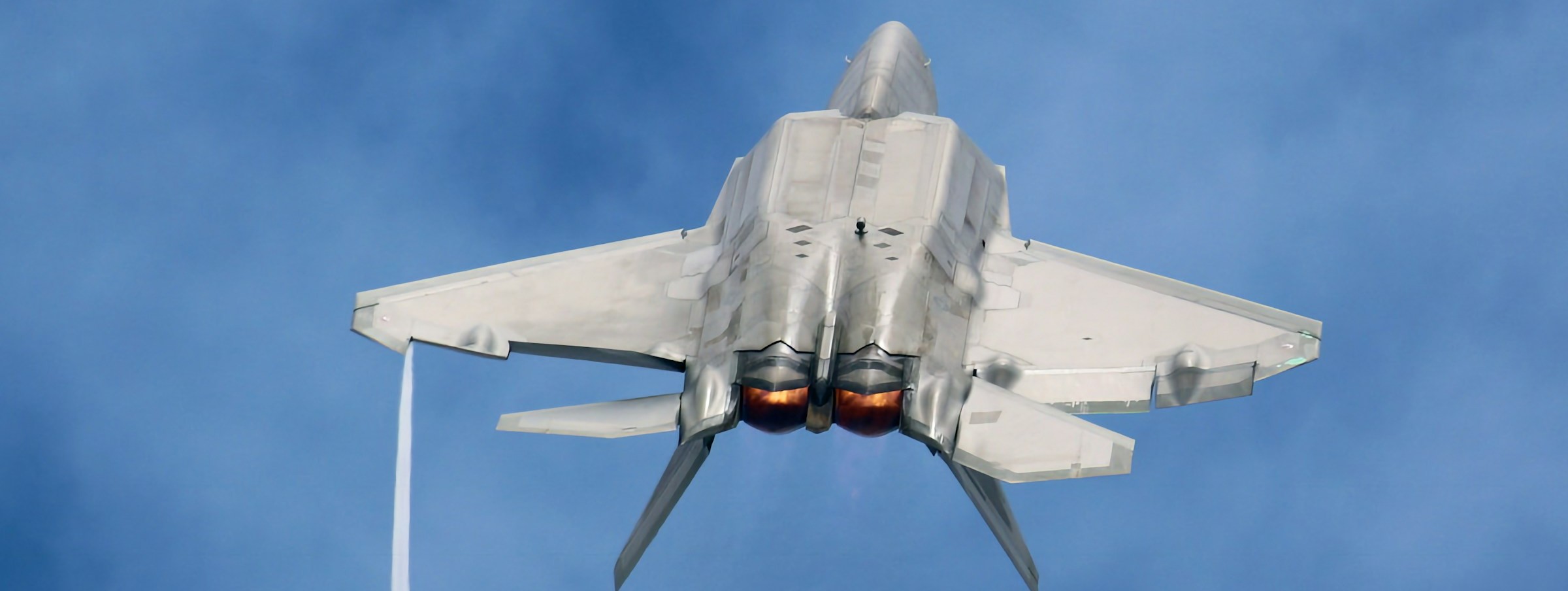 Aviation · Airshow · July 20–24, 2026
Farnborough International Airshow 2026 — Boeing Deals Headline a Subdued Show
The Farnborough International Airshow ran July 20–24, 2026, against a backdrop of industry consolidation and fuel-cost pressure, with Boeing's order announcements among the most prominent of the week.
Boeing's July order figures later showed Uganda Airlines and AerCap agreements as headline deals unveiled during the show, alongside continued momentum from the 737 MAX and 787 programmes.
Vertical Aerospace's VA-1X flying taxi was the show's emblematic new aircraft — positioned as one of the first eVTOL air taxis planned to operate in the UK.
Farnborough International Airshow 2026 — Boeing Deals Headline a Subdued Show
The Farnborough International Airshow ran July 20–24, 2026, against a backdrop of industry consolidation and fuel-cost pressure, with Boeing's order announcements among the most prominent of the week.
Boeing's July order figures later showed Uganda Airlines and AerCap agreements as headline deals unveiled during the show, alongside continued momentum from the 737 MAX and 787 programmes.
Vertical Aerospace's VA-1X flying taxi was the show's emblematic new aircraft — positioned as one of the first eVTOL air taxis planned to operate in the UK.
Full Story
The 2026 edition of Farnborough unfolded in an unusual climate. The show's opening ceremony was cancelled for the first time in its history after Prime Minister Andy Burnham declined the invitation, an inauspicious start to a week dominated by cost pressures, airline consolidation, and the aftermath of a bruising period for manufacturers.
Boeing emerged as the headline order-taker. Deals for Uganda Airlines and lessor AerCap, both unveiled during the show, featured prominently in Boeing's July order book when monthly figures were published in August. The orders reinforced demand for the 737 MAX family even as the manufacturer continued to navigate FAA production-rate caps and the still-uncertified MAX 7 and MAX 10 variants.
The show's most forward-looking moment came from urban air mobility. Vertical Aerospace displayed its VA-1X — described by organisers as planning to be one of the first flying taxis to take off in the UK — reflecting the industry's steady march toward certified eVTOL operations following the FAA's type certification of Joby's S4 earlier in the year.
In the same fortnight, EAA AirVenture Oshkosh (July 20–26) drew the experimental and general-aviation community to Wisconsin, while Seattle hosted an aviation expo on July 8–11 — a busy airshow season bridging the commercial and enthusiast segments of the industry.
Sources
- FlightGlobal
- Royal Aeronautical Society
- Wikipedia — 2026 in aviation
- Vertical Aerospace
 Aviation · Heritage · July 21, 2026
Pan Am's Lost 'Clipper Endeavor' Found After 74 Years — DC-4 Wreck Located at 2,000 ft
A deep-sea expedition announced on July 21 that it had located the wreck of the Douglas DC-4 'Clipper Endeavor' in the Atlantic Ocean off Puerto Rico, 74 years after it ditched as Pan Am Flight 526A in April 1952.
The aircraft was found at a depth of approximately 2,000 feet (610 m) by a team comprising the Air/Sea Heritage Foundation, deep-sea survey firm Deep Sea Vision, and Discovery Channel's 'Expedition Unknown'.
The discovery closes one of commercial aviation's long-standing underwater mysteries and provides a preserved time capsule of the propliner era.
Pan Am's Lost 'Clipper Endeavor' Found After 74 Years — DC-4 Wreck Located at 2,000 ft
A deep-sea expedition announced on July 21 that it had located the wreck of the Douglas DC-4 'Clipper Endeavor' in the Atlantic Ocean off Puerto Rico, 74 years after it ditched as Pan Am Flight 526A in April 1952.
The aircraft was found at a depth of approximately 2,000 feet (610 m) by a team comprising the Air/Sea Heritage Foundation, deep-sea survey firm Deep Sea Vision, and Discovery Channel's 'Expedition Unknown'.
The discovery closes one of commercial aviation's long-standing underwater mysteries and provides a preserved time capsule of the propliner era.
Full Story
Pan Am Flight 526A ditched in the Atlantic on April 11, 1952, after a multiple-engine failure following departure from San Juan, Puerto Rico. Many of those aboard survived the initial ditching but perished awaiting rescue in the days before widespread long-range search-and-rescue capability — a tragedy that helped drive later improvements in oceanic airliner safety and life-raft requirements.
The wreck's location remained unknown for 74 years until the joint expedition — combining historical research, wide-area sonar survey, and remotely operated vehicle verification — positively identified the intact four-engine DC-4 fuselage resting at approximately 2,000 feet of depth.
The find drew broad coverage in The New York Times, USA Today, and TODAY.com, and the Air/Sea Heritage Foundation signalled that photogrammetric documentation of the site would follow, preserving the wreck digitally for historians and the families of those aboard.
Sources
- The New York Times
- USA Today
- TODAY.com
- Air/Sea Heritage Foundation
- Wikipedia — 2026 in aviation
 Aviation · Safety · July 1–10, 2026
A Hard Month for Small Carriers — K2 Airways Crash, TezJet and AirSWIFT Shutdowns
July opened with a cluster of adverse events for smaller carriers: K2 Airways Flight 1732, a Boeing 737-400SF freighter, crashed into the Arabian Sea on July 7 with five occupants aboard after a reported loss of navigation systems.
Kyrgyz regulator revoked TezJet Airlines' licence on July 10, days after an MD-83 taxiing accident, while Philippine regional carrier AirSWIFT ceased operations on July 1 and was absorbed by Cebgo.
The episodes underscore the fragile economics and oversight challenges facing small operators amid 2026's elevated fuel prices and consolidation wave.
A Hard Month for Small Carriers — K2 Airways Crash, TezJet and AirSWIFT Shutdowns
July opened with a cluster of adverse events for smaller carriers: K2 Airways Flight 1732, a Boeing 737-400SF freighter, crashed into the Arabian Sea on July 7 with five occupants aboard after a reported loss of navigation systems.
Kyrgyz regulator revoked TezJet Airlines' licence on July 10, days after an MD-83 taxiing accident, while Philippine regional carrier AirSWIFT ceased operations on July 1 and was absorbed by Cebgo.
The episodes underscore the fragile economics and oversight challenges facing small operators amid 2026's elevated fuel prices and consolidation wave.
Full Story
K2 Airways Flight 1732 went down in the Arabian Sea on July 7, 2026, with early reporting pointing to a loss of navigation systems aboard the Boeing 737-400 freighter. Wreckage was located about 12 hours after the disappearance and a search was mounted for the five people on board the cargo flight.
Days later, on July 10, Kyrgyzstan's civil aviation authority revoked the operating licence of TezJet Airlines following an MD-83 taxiing accident — a swift regulatory response emblematic of the heightened scrutiny small operators face after safety events.
On July 1, Philippine regional carrier AirSWIFT ceased operations and was absorbed by Cebgo, the regional subsidiary of the Philippine Airlines group. The shutdown continued 2026's consolidation trend, which has already claimed Spirit Airlines in the US and driven merger activity such as Allegiant–Sun Country.
Sources
- The Express Tribune
- FlightGlobal
- Aviation Week
- Wikipedia — 2026 in aviation
Space
 Space · Reusability · July 10, 2026
China's Long March 10B Debut Catches Booster on Sea Net — Second Nation to Recover an Orbital Stage
China's Long March 10B flew its maiden mission on July 10 from the Hainan Commercial Space Launch Site, and successfully caught its first stage on a tensioned net aboard a sea platform — the world's first net recovery of an orbital-class booster.
The feat made China only the second nation, after the United States, to recover an orbital launch vehicle first stage, and validated key architecture for the country's 2030 crewed lunar landing programme.
The same week, on July 11, JAXA conducted the first VTVL flight test of its RV-X reusable rocket demonstrator — a pathfinder for the JAXA/CNES/DLR CALLISTO programme.
China's Long March 10B Debut Catches Booster on Sea Net — Second Nation to Recover an Orbital Stage
China's Long March 10B flew its maiden mission on July 10 from the Hainan Commercial Space Launch Site, and successfully caught its first stage on a tensioned net aboard a sea platform — the world's first net recovery of an orbital-class booster.
The feat made China only the second nation, after the United States, to recover an orbital launch vehicle first stage, and validated key architecture for the country's 2030 crewed lunar landing programme.
The same week, on July 11, JAXA conducted the first VTVL flight test of its RV-X reusable rocket demonstrator — a pathfinder for the JAXA/CNES/DLR CALLISTO programme.
Full Story
The Long March 10B lifted off from Launch Complex 2 at the Hainan Commercial Space Launch Site — deliberately distinct from the Wenchang pad used by other Long March 10 variants. The vehicle pairs a kerolox first stage powered by seven YF-100K engines with a methalox second stage, and is rated for at least 16 tonnes to low Earth orbit in reusable mode.
Rather than propulsive landing, the descending first stage was caught on a net-like structure rigged aboard a vessel in the South China Sea — an approach China selected to reduce landing propellant reserves. The catch marked China's first successful controlled recovery of an orbital booster and the first successful net recovery anywhere in the world.
The flight was produced by Chinarocket Co., the commercial arm of CALT, reflecting a strategy of subsidising crewed-spaceflight development with commercial revenue. The recovery technique directly informs the Long March 10A that will loft the Mengzhou crewed spacecraft and Lanyue lander for China's two-launch crewed lunar landing profile targeted before 2030.
Days later, JAXA's RV-X demonstrator performed its first vertical-takeoff-vertical-landing hop, advancing reusable-booster guidance techniques for the trinational CALLISTO effort with France's CNES and Germany's DLR — a sign that propulsive recovery is becoming a global baseline capability rather than a SpaceX monopoly.
Sources
- Wikipedia — 2026 in spaceflight
- Wikipedia — Long March 10
- CASC / CALT
- JAXA
- SpaceNews
 Space · India · July 18, 2026
Skyroot's Vikram-1 Reaches Orbit — India's First Private Rocket, Third Nation with Private Launch
Skyroot Aerospace's Vikram-1 flew its maiden mission 'Aagaman' on July 18 from the Satish Dhawan Space Centre, reaching orbit on the first attempt and deploying its full payload stack roughly 15 minutes after liftoff.
The success made India the third country — after the United States and China — with a privately developed orbital launch capability.
The four-stage vehicle carried Indian payloads SCOPE, SOLARAS S3, and the EMBRACE robotic arm demonstrator, plus German DCUBED sub-payloads on the Mission Aaghan rideshare.
Skyroot's Vikram-1 Reaches Orbit — India's First Private Rocket, Third Nation with Private Launch
Skyroot Aerospace's Vikram-1 flew its maiden mission 'Aagaman' on July 18 from the Satish Dhawan Space Centre, reaching orbit on the first attempt and deploying its full payload stack roughly 15 minutes after liftoff.
The success made India the third country — after the United States and China — with a privately developed orbital launch capability.
The four-stage vehicle carried Indian payloads SCOPE, SOLARAS S3, and the EMBRACE robotic arm demonstrator, plus German DCUBED sub-payloads on the Mission Aaghan rideshare.
Full Story
Vikram-1 lifted off at 06:35 UTC on July 18, 2026, from the First Launch Pad at Satish Dhawan Space Centre, Sriharikota. The four-stage small-lift vehicle uses three solid-fuel stages — Kalam-1200, Kalam-250, and Kalam-100 — topped by a liquid hypergolic fourth stage driven by Raman engines, an architecture chosen for low part count and rapid, cost-effective production.
Mission Aagaman delivered a multi-customer payload stack to low Earth orbit: India's SCOPE and SOLARAS S3 satellites, the EMBRACE mission carrying a Cosmoserve Space robotic arm, and a cluster of Mission Aaghan sub-payloads including DCUBED's German UD3PP and mD3RN technology demonstrations alongside COSMIC BLOOM and MICRO ART TRIBUTE.
The orbital insertion on debut is a rare achievement in launch history — most new small launchers have needed multiple attempts to reach orbit. For India, whose space sector was opened to private players through the 2020 reforms, Vikram-1's success validates the IN-SPACe regulatory model and positions Skyroot to compete in the Asian small-satellite launch market.
Sources
- Wikipedia — Vikram-1
- Skyroot Aerospace
- ISRO
- SpaceNews
 Space · Starship · July 24, 2026
Starship Flight 13 Returns to Flight Successfully After Flight 12 Investigation
SpaceX flew Starship's thirteenth flight test on July 24, a successful mission that marked the programme's return to flight after the Flight 12 booster loss and subsequent FAA mishap investigation.
The flight continued the Block 3 test campaign that began with Flight 12 in May, extending SpaceX's iterative test tempo for the super-heavy launch system.
With Flight 13 counted a success, Starship's overall record stood at 13 launches with 8 full successes — incremental progress toward the operational cadence NASA's Artemis lunar lander plans depend on.
Starship Flight 13 Returns to Flight Successfully After Flight 12 Investigation
SpaceX flew Starship's thirteenth flight test on July 24, a successful mission that marked the programme's return to flight after the Flight 12 booster loss and subsequent FAA mishap investigation.
The flight continued the Block 3 test campaign that began with Flight 12 in May, extending SpaceX's iterative test tempo for the super-heavy launch system.
With Flight 13 counted a success, Starship's overall record stood at 13 launches with 8 full successes — incremental progress toward the operational cadence NASA's Artemis lunar lander plans depend on.
Full Story
Starship Flight 13 lifted off from Starbase on July 24, 2026, restoring the programme's momentum after the May 22 Flight 12 mission in which the Super Heavy booster crashed into the Gulf of Mexico at some 1,450 km/h following an engine-relight shortfall, prompting the FAA to ground the vehicle on May 27 pending a mishap investigation.
Flight 13 continued flying the Block 3 vehicle generation introduced on Flight 12, whose Raptor 3 engines debuted on the type's first 2026 flight. The Block 3 ship variant carries structural and propellant upgrades intended to support Starlink V3 deployment and eventual tanker operations.
The stakes reach well beyond Texas: NASA's Artemis III crewed lunar landing depends on a Starship Human Landing System, and Blue Origin's May 28 New Glenn pad explosion has narrowed the agency's alternative lander options in the near term. Each successful Starship flight therefore carries direct programme significance for America's lunar architecture.
Sources
- Wikipedia — SpaceX Starship
- SpaceX
- NASASpaceflight.com
- Ars Technica
 Space · Retirement · July 3, 2026
Pegasus XL Flies Its Final Mission — Orbital Air-Launch Era Ends
Northrop Grumman's Pegasus XL air-launched rocket flew its final mission on July 3, launching NASA's LINK spacecraft from Kwajalein Atoll in a bid to boost the ageing Neil Gehrels Swift Observatory.
The retirement leaves no active orbital air-launch system operating anywhere in the world, closing a chapter of launch history that began with Pegasus's first flight in 1990.
The LINK spacecraft — built with Katalyst Space Technologies — subsequently suffered technical problems, and NASA announced on August 19 that rescue efforts for the Swift gamma-ray observatory had been cancelled.
Pegasus XL Flies Its Final Mission — Orbital Air-Launch Era Ends
Northrop Grumman's Pegasus XL air-launched rocket flew its final mission on July 3, launching NASA's LINK spacecraft from Kwajalein Atoll in a bid to boost the ageing Neil Gehrels Swift Observatory.
The retirement leaves no active orbital air-launch system operating anywhere in the world, closing a chapter of launch history that began with Pegasus's first flight in 1990.
The LINK spacecraft — built with Katalyst Space Technologies — subsequently suffered technical problems, and NASA announced on August 19 that rescue efforts for the Swift gamma-ray observatory had been cancelled.
Full Story
Pegasus XL, carried aloft by its L-1011 'Stargazer' carrier aircraft, made its last flight on July 3, 2026, carrying the LINK servicing demonstrator for NASA and Katalyst Space Technologies. The mission aimed to grapple and reboost the Neil Gehrels Swift Observatory, a gamma-ray burst hunter launched in 2004 whose orbit had decayed to the point of threatening mission end.
The Pegasus programme spans more than three decades of orbital air-launch operations — a capability prized for flexibility of launch location and inclination, but ultimately uneconomic against reusable ground-launched small lifters like Falcon 9 and Electron. Its retirement removes the last operational air-launched orbital system worldwide.
In a coda to the mission, the LINK spacecraft encountered technical issues after deployment. NASA formally cancelled the Swift rescue attempt on August 19, 2026, ending hopes of extending the observatory's two-decade science run and underscoring how difficult on-orbit servicing remains even as the industry races to commercialise it.
Sources
- Wikipedia — 2026 in spaceflight
- NASA
- Northrop Grumman
- Katalyst Space Technologies
 Space · Science · July 4–5, 2026
Asteroid Double Header — Tianwen-2 Begins Sampling as Hayabusa2 Flies By Torifune
China's Tianwen-2 spacecraft rendezvoused with quasi-satellite asteroid 469219 Kamo'oalewa on July 4 and began sample collection, advancing the mission it launched in late May.
The following day, Japan's Hayabusa2 probe flew by near-Earth asteroid 98943 Torifune, returning humanity's first close-up views of that object.
The back-to-back encounters gave planetary scientists first-ever in-situ data on two near-Earth small bodies within 48 hours — a milestone week for asteroid exploration.
Asteroid Double Header — Tianwen-2 Begins Sampling as Hayabusa2 Flies By Torifune
China's Tianwen-2 spacecraft rendezvoused with quasi-satellite asteroid 469219 Kamo'oalewa on July 4 and began sample collection, advancing the mission it launched in late May.
The following day, Japan's Hayabusa2 probe flew by near-Earth asteroid 98943 Torifune, returning humanity's first close-up views of that object.
The back-to-back encounters gave planetary scientists first-ever in-situ data on two near-Earth small bodies within 48 hours — a milestone week for asteroid exploration.
Full Story
Tianwen-2's July 4 rendezvous with Kamo'oalewa — a roughly 40–100 metre 'quasi-moon' that co-orbits the Sun alongside Earth — followed the spacecraft's progressive approach burns in late June. Touching the sampling phase of the mission, China aims to return material from the unusually silicate-rich body to Earth in late 2027, before redirecting the spacecraft toward main-belt comet 311P/PANSTARRS with arrival around 2034.
On July 5, JAXA's Hayabusa2 — flying an extended mission after returning samples from Ryugu in 2020 — swung past 98943 Torifune at flyby distance, imaging the rapidly rotating asteroid and probing its composition. Torifune has one of the shortest rotation periods known among kilometre-scale bodies, making the observations valuable for understanding how loose rubble-pile interiors hold together.
Together with NASA's OSIRIS-REx sample return and the Psyche mission's ongoing cruise, the July encounters highlight a golden period for small-body science — one with direct relevance to both planetary defence and future asteroid resource utilisation.
Sources
- Wikipedia — 2026 in spaceflight
- CNSA
- JAXA
- The Planetary Society
- SpaceNews
Defense
 Defense · Weapons · July 2026
US Navy Reveals 'Malice' — New Long-Range Air-to-Air Missile for 4th-to-6th Gen Fighters
The US Navy revealed a new long-range air-to-air missile dubbed 'Malice', designed to arm fourth-, fifth-, and sixth-generation combat aircraft.
The disclosure signals the service's intent to field a next-generation beyond-visual-range weapon as fighter fleets transition toward the F/A-XX and NGAD era.
The programme joins a widening Western effort to field longer-range air-dominance weapons in response to peer adversaries' advanced interceptor and A2/AD capabilities.
US Navy Reveals 'Malice' — New Long-Range Air-to-Air Missile for 4th-to-6th Gen Fighters
The US Navy revealed a new long-range air-to-air missile dubbed 'Malice', designed to arm fourth-, fifth-, and sixth-generation combat aircraft.
The disclosure signals the service's intent to field a next-generation beyond-visual-range weapon as fighter fleets transition toward the F/A-XX and NGAD era.
The programme joins a widening Western effort to field longer-range air-dominance weapons in response to peer adversaries' advanced interceptor and A2/AD capabilities.
Full Story
Reported by Defense News in July 2026, the Navy's 'Malice' missile is conceived as a long-range air-to-air weapon compatible across the service's fighter inventory — from legacy fourth-generation jets through the fifth-generation F-35C and onward to the sixth-generation platforms under development.
Long-range air-to-air engagement has become a priority across Western air forces as potential adversaries field large, long-range interceptors and dense integrated air-defence networks. Weapons like Malice are intended to let manned fighters — and potentially CCA loyal-wingman drones — engage threats from outside defensive engagement envelopes.
The reveal complements a broader US effort that includes the AIM-260 JATM programme and air-launched effects developed for the Collaborative Combat Aircraft ecosystem, where the June production award to General Atomics and Anduril established the first operational loyal-wingman fleet.
Sources
- Defense News (Diana Stancy)
- US Navy
 Defense · Space · July 7, 2026
Eight NATO Allies Launch HALO Satellite Constellation Initiative
Eight NATO allies jointly launched the HALO satellite constellation initiative, a multinational effort to field allied-owned space capabilities for collective defence.
The initiative emerged as European allies seek indigenous alternatives and complements to US commercial and military space assets amid growing dependence on satellite communications and ISR.
HALO adds to a rapid European space-build-up that includes ICEYE's plan to double its radar-satellite capacity by late 2027 on surging demand.
Eight NATO Allies Launch HALO Satellite Constellation Initiative
Eight NATO allies jointly launched the HALO satellite constellation initiative, a multinational effort to field allied-owned space capabilities for collective defence.
The initiative emerged as European allies seek indigenous alternatives and complements to US commercial and military space assets amid growing dependence on satellite communications and ISR.
HALO adds to a rapid European space-build-up that includes ICEYE's plan to double its radar-satellite capacity by late 2027 on surging demand.
Full Story
Announced on July 7, 2026, and covered by Defense News, the HALO constellation initiative unites eight NATO members in developing and fielding a shared satellite capability — a structurally significant departure from the alliance's usual reliance on national systems or US-provided assets.
The move reflects hard lessons about the vulnerability of space-dependent warfare: satellite communications, navigation, and intelligence underpin everything from precision strike to drone operations. Allied-owned constellations reduce single points of failure and keep capability flowing even if access to US systems becomes contested.
Industry context reinforces the trend: Finnish SAR provider ICEYE disclosed plans to double its radar-satellite capacity by late 2027 as demand surges from governments, and the EU's GOVSATCOM encrypted-communications programme became operational earlier in the year. HALO extends that logic into a formally allied framework.
Sources
- Defense News
- NATO
- ICEYE
 Defense · Fighters · July 21, 2026
India Seeks Role in France's Sixth-Generation Fighter Programme Post-FCAS
India signaled on July 21 that it is seeking a formal role in France's sixth-generation fighter effort, aiming to gain advanced fighter-development knowledge and industrial workshare.
The overture follows the June collapse of the Franco-German-Spanish FCAS programme, which left France pursuing a national path to a Rafale successor.
For Dassault and its Indian industrial partners, a cooperation framework would build on the Rafale relationship and India's expanding aerospace manufacturing base.
India Seeks Role in France's Sixth-Generation Fighter Programme Post-FCAS
India signaled on July 21 that it is seeking a formal role in France's sixth-generation fighter effort, aiming to gain advanced fighter-development knowledge and industrial workshare.
The overture follows the June collapse of the Franco-German-Spanish FCAS programme, which left France pursuing a national path to a Rafale successor.
For Dassault and its Indian industrial partners, a cooperation framework would build on the Rafale relationship and India's expanding aerospace manufacturing base.
Full Story
Reporting by Anjana Pasricha in Defense News on July 21, 2026, detailed India's interest in joining France's post-FCAS sixth-generation aircraft programme. With FCAS formally scrapped in early June after unresolvable Dassault–Airbus disputes, France emerged as the sole European nation proceeding with an independent next-generation fighter development.
India's motivation is as much industrial as strategic: a partnership would transfer design authority experience in stealth, sensors, and combat-cloud technologies that India's own Advanced Medium Combat Aircraft programme has struggled to master domestically. French-Indian defence ties have deepened steadily through Rafale sales, Scorpène submarine construction, and jet-engine cooperation talks.
The prospect of Indian participation also reshapes the sixth-generation landscape: with the UK-Japan-Italy GCAP now Europe's only multinational programme after FCAS's collapse, a France-India axis would create a second pole of next-generation fighter development outside the US F-47 and China's J-36/J-50 programmes.
Sources
- Defense News (Anjana Pasricha)
- Dassault Aviation
- Reuters
Defense · Missile Defense · July 15, 2026European Firms Team on Exo-Atmospheric Interceptor for 2027 Test
European defence companies announced plans on July 15 to develop an exo-atmospheric interceptor, with a first test targeted for 2027.
The weapon would intercept ballistic and hypersonic threats in space, during the midcourse phase of flight — a capability Europe currently lacks indigenously.
The programme aligns with NATO's growing investment in layered air-and-missile defence following the strategic shocks of the past year.
European Firms Team on Exo-Atmospheric Interceptor for 2027 Test
European defence companies announced plans on July 15 to develop an exo-atmospheric interceptor, with a first test targeted for 2027.
The weapon would intercept ballistic and hypersonic threats in space, during the midcourse phase of flight — a capability Europe currently lacks indigenously.
The programme aligns with NATO's growing investment in layered air-and-missile defence following the strategic shocks of the past year.
Full Story
Reported by Defense News on July 15, 2026, the consortium of European firms plans an exo-atmospheric interceptor — a kill vehicle designed to destroy incoming ballistic missiles, and potentially manoeuvring hypersonic threats, outside the atmosphere during the midcourse phase of their trajectory.
Europe's current missile-defence inventory is largely limited to endo-atmospheric systems such as Aster 30 and Patriot, plus the sea-based SM-3 procurements made through NATO's territorial ballistic missile defence. A sovereign exo-atmospheric capability would close a critical gap at a time when hypersonic glide vehicles render traditional terminal defences increasingly challenged.
The 2027 test date is ambitious for a European cooperative programme, but participants are leveraging technology matured through ESA and national hypersonics research. The initiative parallels the US Golden Dome architecture and reinforces the continent's post-2026 push for strategic autonomy in missile defence.
Sources
- Defense News
- MBDA
- European Defence Agency
Robotics & AI
 AI · Models · July 24, 2026
Anthropic Launches Claude Opus 5 — 'Step Change' for Long-Running AI Agents
Anthropic released Claude Opus 5 on July 24, describing it as a step-change improvement for the Opus tier, powering long-running agents while advancing coding and professional-work performance.
The release doubled down on agentic reliability — the ability of AI systems to execute multi-step workflows over hours rather than minutes — as the frontier battleground.
Opus 5 lands amid an extraordinary competitive stretch: Anthropic's $65 billion raise and confidential S-1 filing in May-June, and a Wall Street debut race with OpenAI.
Anthropic Launches Claude Opus 5 — 'Step Change' for Long-Running AI Agents
Anthropic released Claude Opus 5 on July 24, describing it as a step-change improvement for the Opus tier, powering long-running agents while advancing coding and professional-work performance.
The release doubled down on agentic reliability — the ability of AI systems to execute multi-step workflows over hours rather than minutes — as the frontier battleground.
Opus 5 lands amid an extraordinary competitive stretch: Anthropic's $65 billion raise and confidential S-1 filing in May-June, and a Wall Street debut race with OpenAI.
Full Story
Claude Opus 5, announced July 24, 2026, extends Anthropic's flagship Opus line with what the company characterised as a step-change for long-running agentic workloads — tasks where an AI must plan, act, use tools, and recover from errors across extended autonomous sessions without human intervention.
The emphasis on sustained agency reflects where enterprise value is concentrating: Anthropic's own Economic Index research, updated through July, tracks the shift of AI usage from chat toward task execution in software engineering, analysis, and operations. The companion 'Ask Claude about the Economic Index' product feature released July 22 lets users query that research directly.
The launch caps a pivotal run for the company: a $65 billion Series H at a $965 billion valuation and confidential S-1 filing in late May-June, a $20 million donation to Public First Action announced July 21, and an expanded Cognizant partnership on July 27 to bring Claude to enterprise clients at scale. A US public-market debut now appears a matter of timing rather than direction.
Sources
- Anthropic News
- Anthropic Blog
- CNBC
- TechCrunch
 AI · Defense Policy · July 2026
US Air Force Orders Contractors to Purge Anthropic Models by September 1
The US Air Force issued a memo directing contractors to purge Anthropic models from their systems by September 1, 2026, according to Breaking Defense reporting.
The directive extends the world's first frontier-AI export-control episode — June's US-ordered suspension of Claude Fable 5 and Mythos 5 — from the lab itself to the defence supply chain.
The move forces defence primes and startups alike to re-architect AI tooling, and crystallises the tension between commercial AI adoption and national-security control regimes.
US Air Force Orders Contractors to Purge Anthropic Models by September 1
The US Air Force issued a memo directing contractors to purge Anthropic models from their systems by September 1, 2026, according to Breaking Defense reporting.
The directive extends the world's first frontier-AI export-control episode — June's US-ordered suspension of Claude Fable 5 and Mythos 5 — from the lab itself to the defence supply chain.
The move forces defence primes and startups alike to re-architect AI tooling, and crystallises the tension between commercial AI adoption and national-security control regimes.
Full Story
Breaking Defense reported in July 2026 that the Air Force had circulated a memo instructing contractors to remove Anthropic's models from their systems by September 1 — a procurement-level prohibition that reaches far beyond the original June 12 Commerce Department directive that briefly suspended Claude Fable 5 and Mythos 5 worldwide.
For the defence-industrial base, the order is operationally disruptive. Contractors that had embedded Claude into proposal drafting, code generation, logistics analysis, and MRO documentation workflows now face re-engineering those pipelines onto other providers' models — at cost and schedule impact — while maintaining compliance documentation for every affected system.
Strategically, the memo signals that the Pentagon is willing to weaponise procurement against specific AI vendors when national-security concerns arise, a precedent that chills defence-adjacent AI procurement. It also strengthens the case, advanced by Anthropic in its July 27 open-weights policy position, for clearer governmental frameworks governing frontier-model access — before a patchwork of ad-hoc directives fragments the market further.
Sources
- Breaking Defense
- US Air Force
- Forbes
AI · Policy · July 27, 2026Anthropic Charts Its Open-Weights Position as Industry Fault Line Hardens
Anthropic published its formal position on open-weights models on July 27, staking out policy ground in the industry's most contested debate: how openly frontier AI capabilities should be distributed.
The statement arrived weeks before the EU AI Act's August 2 full-application date, with the Act's general-purpose AI obligations shaping European deployment decisions.
The same week, Anthropic expanded its Cognizant partnership to deliver Claude to enterprise clients — pairing its policy stance with aggressive commercial distribution.
Anthropic Charts Its Open-Weights Position as Industry Fault Line Hardens
Anthropic published its formal position on open-weights models on July 27, staking out policy ground in the industry's most contested debate: how openly frontier AI capabilities should be distributed.
The statement arrived weeks before the EU AI Act's August 2 full-application date, with the Act's general-purpose AI obligations shaping European deployment decisions.
The same week, Anthropic expanded its Cognizant partnership to deliver Claude to enterprise clients — pairing its policy stance with aggressive commercial distribution.
Full Story
Anthropic's July 27, 2026 position paper on open-weights models addresses the question of whether frontier-class model weights should be publicly released — a debate that has divided the industry since Meta's Llama releases began closing the capability gap with proprietary leaders.
The timing is pointed. The EU AI Act reached full application on August 2, 2026, and its general-purpose AI model provisions impose transparency and systemic-risk obligations that interact directly with open distribution. Vendors selling into Europe must now navigate both the Act's requirements and the lingering aftereffects of the June US export-control episode.
Commercially, Anthropic continued scaling distribution: the expanded Cognizant partnership announced the same day embeds Claude across the consultancy's enterprise delivery organisation, extending the model into thousands of client environments. The juxtaposition of a cautious open-weights stance with maximal enterprise reach encapsulates Anthropic's strategy — controlled proliferation through institutional channels rather than open release.
Sources
- Anthropic News
- European Commission
- Cognizant
AI · Safety · July 30, 2026Anthropic Discloses Investigation Into Three Real-World Cybersecurity Incidents
Anthropic disclosed on July 30 that it is investigating three real-world incidents uncovered within its cybersecurity evaluations of frontier models.
The disclosure represents a notable step toward transparency about how AI safety teams handle discovered capability-adjacent risks outside laboratory settings.
It follows the industry's turbulent mid-2026, when a reported jailbreak triggered unprecedented US export-control action against frontier models.
Anthropic Discloses Investigation Into Three Real-World Cybersecurity Incidents
Anthropic disclosed on July 30 that it is investigating three real-world incidents uncovered within its cybersecurity evaluations of frontier models.
The disclosure represents a notable step toward transparency about how AI safety teams handle discovered capability-adjacent risks outside laboratory settings.
It follows the industry's turbulent mid-2026, when a reported jailbreak triggered unprecedented US export-control action against frontier models.
Full Story
On July 30, 2026, Anthropic announced an active investigation into three real-world incidents identified through its cybersecurity evaluation programme — the internal red-teaming process through which the lab tests whether frontier models could materially assist malicious cyber operations.
The disclosure is significant for AI-governance practice. Few frontier labs publicly acknowledge specific real-world incidents tied to their evaluation findings; doing so creates both accountability and a template for how the industry's safety commitments under frameworks like the Frontier AI Safety Commitments are operationalised.
The episode lands in a sensitive period. The June export-control suspension of Claude Fable 5 and Mythos 5 — linked by Forbes to a reported jailbreak — demonstrated how swiftly capability concerns can escalate to state action. Rigorous, transparent cyber evaluation has become existential for labs serving government and defence customers, where Anthropic's Air Force purge order shows the cost of lost trust.
Sources
- Anthropic News
- Forbes
- BBC
All stories above are based on reporting from primary news outlets during July 2026. Source attributions are listed in the expanded detail for each story.