
May 2026 was a defining month. Spirit Airlines shut down after 43 years. The US-Iran war's offensive phase ended amid debate over its success. SpaceX launched the first Block 3 Starship — and lost the booster. Blue Origin's New Glenn exploded on the pad. China rotated the Tiangong crew. Google declared the "agentic Gemini era." Anthropic raised $65 billion. Read on for the details.
Aviation
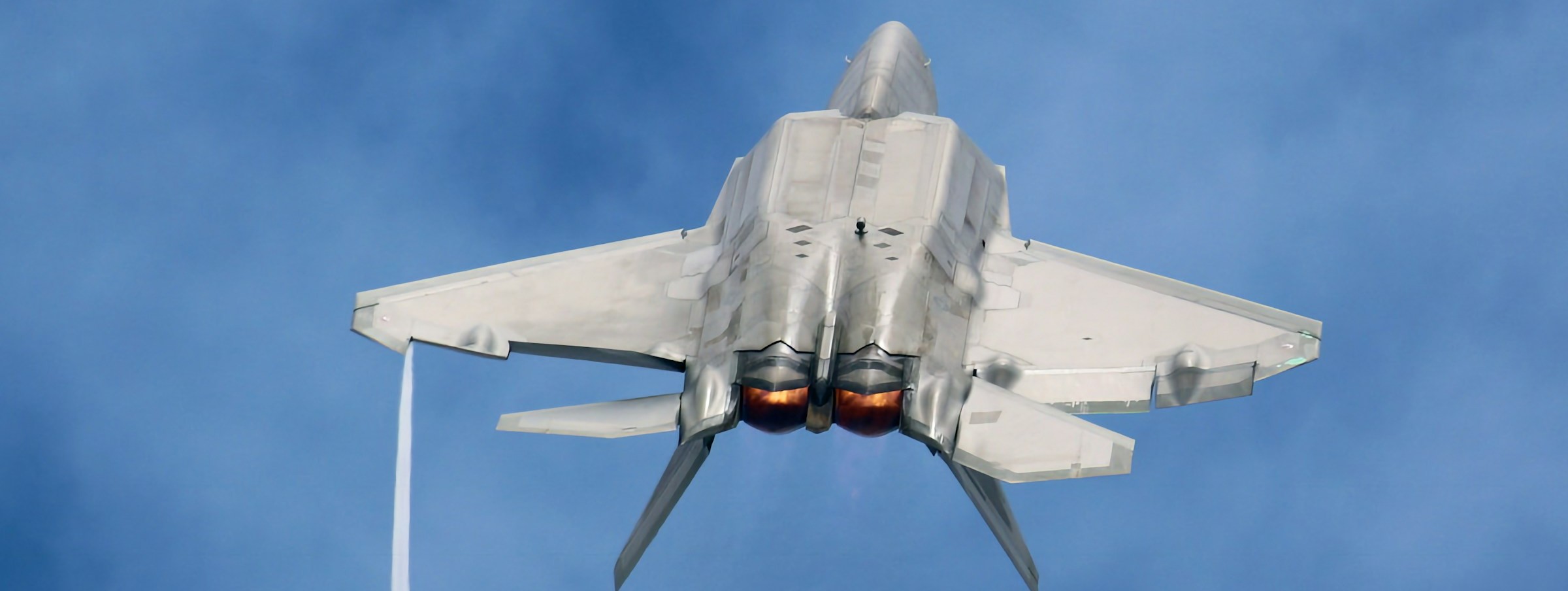 Aviation · Industry · May 2, 2026
Spirit Airlines Ceases All Operations — End of a 43-Year Run
Spirit Airlines abruptly ceased all flight operations on May 2, 2026, ending a 43-year run as one of America's largest ultra-low-cost carriers.
The shutdown came after bailout negotiations with the Trump administration failed and surging jet fuel prices linked to the 2026 Iran war made its business model unsustainable.
At closing the airline operated 131 aircraft to 73 destinations from 11 bases; it planned to file for Chapter 7 liquidation.
Spirit Airlines Ceases All Operations — End of a 43-Year Run
Spirit Airlines abruptly ceased all flight operations on May 2, 2026, ending a 43-year run as one of America's largest ultra-low-cost carriers.
The shutdown came after bailout negotiations with the Trump administration failed and surging jet fuel prices linked to the 2026 Iran war made its business model unsustainable.
At closing the airline operated 131 aircraft to 73 destinations from 11 bases; it planned to file for Chapter 7 liquidation.
Full Story
Spirit Airlines, headquartered in Dania Beach, Florida, was once the seventh-largest passenger carrier in North America. Founded in 1964 as a trucking company and pivoting to charter flights in 1983, Spirit pioneered the ultra-low-cost carrier model in the United States, offering bare-bones base fares supplemented by fees for nearly every service.
The airline's troubles escalated through the 2020s. A proposed merger with Frontier in 2022 was outbid by JetBlue, and the JetBlue merger was blocked by the Biden administration in January 2024, leaving Spirit financially weakened. Spirit filed for Chapter 11 bankruptcy in November 2024, briefly emerged from restructuring in early 2025, but filed again in August 2025.
On May 2, 2026, Spirit halted all operations with minimal advance notice. The sharp rise in jet fuel prices linked to the Iran war made its low-cost model unsustainable. The airline's website was replaced by a restructuring site. Operations ended within a day of the announcement. Spirit was the second major U.S. airline shutdown of 2026, following Tailwind Air in January.
Sources
- The New York Times
- Spirit Airlines restructuring website
- Wikipedia — Spirit Airlines
- Wikipedia — 2026 in aviation
 Aviation · M&A · May 13, 2026
Allegiant Closes $1.5 Billion Sun Country Acquisition
Allegiant Travel Company completed its approximately $1.5 billion acquisition of Sun Country Airlines on May 13, 2026, creating a combined ultra-low-cost carrier group.
The U.S. DOT approved the merger on April 15, and shareholders of both companies approved it on May 8, with Allegiant shareholders owning roughly 67% of the combined entity.
Sun Country's CEO joined the combined board; the two airlines continue to operate separately while working toward a single FAA operating certificate.
Allegiant Closes $1.5 Billion Sun Country Acquisition
Allegiant Travel Company completed its approximately $1.5 billion acquisition of Sun Country Airlines on May 13, 2026, creating a combined ultra-low-cost carrier group.
The U.S. DOT approved the merger on April 15, and shareholders of both companies approved it on May 8, with Allegiant shareholders owning roughly 67% of the combined entity.
Sun Country's CEO joined the combined board; the two airlines continue to operate separately while working toward a single FAA operating certificate.
Full Story
The Allegiant-Sun Country merger, first announced January 11, 2026, represents one of the most significant U.S. airline consolidation moves in recent years. Allegiant agreed to acquire Sun Country (NASDAQ: SNCY) for approximately $1.5 billion in cash and stock.
Under the deal, Allegiant assumed Sun Country's 67-aircraft Boeing 737 fleet, 172 destinations, charter operations, and cargo contracts including Amazon Air. The combined airline was planned to operate under the Allegiant brand while maintaining a significant presence at Minneapolis-Saint Paul.
The two airlines combined distinct business models — Allegiant's point-to-point leisure model and Sun Country's mix of scheduled leisure, charter, and cargo operations. The merger was part of a broader consolidation wave that also saw Spirit Airlines shut down and Asiana Airlines announce its December 2026 closure.
Sources
- CNBC (Leslie Josephs)
- Wikipedia — 2026 in aviation
- SEC 8-K filings
- Las Vegas Review-Journal
- U.S. DOT order
 Aviation · Legal · May 21, 2026
Air France & Airbus Found Guilty of Manslaughter Over 2009 AF447 Disaster
The Paris Court of Appeal found both Air France and Airbus guilty of corporate manslaughter over the June 1, 2009 crash of Flight 447, which killed all 228 people aboard.
The verdict overturned a lower court's 2022 acquittal, holding the companies responsible for the A330 disaster involving pitot-tube icing and crew failure to recover from a stall.
The ruling carries significant implications for aviation industry liability and corporate responsibility in safety certification and pilot training.
Air France & Airbus Found Guilty of Manslaughter Over 2009 AF447 Disaster
The Paris Court of Appeal found both Air France and Airbus guilty of corporate manslaughter over the June 1, 2009 crash of Flight 447, which killed all 228 people aboard.
The verdict overturned a lower court's 2022 acquittal, holding the companies responsible for the A330 disaster involving pitot-tube icing and crew failure to recover from a stall.
The ruling carries significant implications for aviation industry liability and corporate responsibility in safety certification and pilot training.
Full Story
Air France Flight 447, an Airbus A330-203 operating from Rio de Janeiro to Paris, crashed into the Atlantic Ocean on June 1, 2009, killing all 216 passengers and 12 crew members. The aircraft stalled after icing blocked its pitot tubes, causing inconsistent airspeed readings, and the crew failed to recover from the stall during a prolonged descent.
The prosecution argued that Air France failed to adequately train pilots for high-altitude stall recovery, while Airbus was culpable for delays in replacing unreliable pitot tubes and for incomplete stall warning system design. A lower court had acquitted both companies in 2022.
The verdict is expected to set precedent in how courts treat manufacturer and operator liability in complex aviation accidents. The crash remains one of the deadliest in Air France's history and was the deadliest accident involving an Airbus A330 at the time.
Sources
- BBC News (Sofia Ferreira Santos)
- Wikipedia — 2026 in aviation
 Aviation · Presidential · May 1, 2026
Boeing VC-25B Bridge Aircraft Completes Modifications for Interim Air Force One
The U.S. Air Force announced on May 1 that the VC-25B Bridge aircraft — a Qatari-donated Boeing 747-8i modified to serve as interim Air Force One — had completed all modifications and flight testing.
The aircraft was undergoing painting in the red, white, blue, and gold livery requested by President Trump, with delivery planned for summer 2026.
The programme was executed by L3Harris with support from Boeing, addressing years of delays in the full VC-25B programme.
Boeing VC-25B Bridge Aircraft Completes Modifications for Interim Air Force One
The U.S. Air Force announced on May 1 that the VC-25B Bridge aircraft — a Qatari-donated Boeing 747-8i modified to serve as interim Air Force One — had completed all modifications and flight testing.
The aircraft was undergoing painting in the red, white, blue, and gold livery requested by President Trump, with delivery planned for summer 2026.
The programme was executed by L3Harris with support from Boeing, addressing years of delays in the full VC-25B programme.
Full Story
A Boeing 747-8i Boeing Business Jet, originally built for the Qatar Amiri Flight VIP fleet, was donated to the United States by Qatar in 2025 for use as interim presidential transport. President Trump had personally toured the aircraft at Palm Beach International Airport on February 15, 2025.
L3Harris performed complex modifications focused on safety, security, and mission communications rather than interior aesthetics. The Air Force deliberately minimised structural changes to compress the timeline. Flight testing was conducted at Greenville, Texas.
The full VC-25B aircraft (two purpose-built Boeing 747-8Is under contract to Boeing) are not expected for delivery until 2028, having slipped from an original 2024 target. The aircraft ultimately made its inaugural flight as Air Force One on July 1, 2026.
Sources
- U.S. Air Force Secretary of the Air Force Public Affairs
- The War Zone (Howard Altman)
- Wikipedia — Boeing VC-25B
Space
 Space · Starship · May 22, 2026
SpaceX Starship Flight 12 — First Block 3 Launch; Booster Lost, Ship Safely Splashes Down
SpaceX launched the first Block 3 Starship (Ship 39 / Booster 19) from Starbase Pad 2 on May 22, after a May 21 scrub at T-40 seconds when a hydraulic pin failed to retract.
One engine failed during ascent and the booster flipped abnormally, crashing into the Gulf of Mexico at 1,450 km/h after only one engine reignited for landing.
The Ship successfully deployed 22 Starlink simulators, performed re-entry stress tests, and splashed down safely in the Indian Ocean, though the FAA grounded Starship on May 27 pending investigation.
SpaceX Starship Flight 12 — First Block 3 Launch; Booster Lost, Ship Safely Splashes Down
SpaceX launched the first Block 3 Starship (Ship 39 / Booster 19) from Starbase Pad 2 on May 22, after a May 21 scrub at T-40 seconds when a hydraulic pin failed to retract.
One engine failed during ascent and the booster flipped abnormally, crashing into the Gulf of Mexico at 1,450 km/h after only one engine reignited for landing.
The Ship successfully deployed 22 Starlink simulators, performed re-entry stress tests, and splashed down safely in the Indian Ocean, though the FAA grounded Starship on May 27 pending investigation.
Full Story
Starship Flight 12 marked several firsts: the Block 3 vehicle generation debut, first launch from Starbase's second orbital pad (OLP-2), and first use of Booster 19 / Ship 39. The payload was approximately 37,500 kg — 20 Starlink V3 mass simulators and 2 modified Starlink V2 satellites, deployed via an improved 'Pez dispenser' over roughly 10 minutes.
During flight, one Raptor on the Ship shut down after only 36 seconds, and another vacuum engine failed at T+3:10. After separation, the Super Heavy booster flipped 'abnormally rapidly,' causing most engines to fail during boostback. Only 20 of 28 initially relit, and most failed within seconds. During the landing burn, only one engine reignited. The booster impacted the Gulf of Mexico at approximately 1,450 km/h.
The Ship compensated by extending SECO and flew a contingency profile. It performed intentional stress tests on the aft flaps during re-entry and successfully splashed down at T+1:05:26. On May 27, the FAA declared the Super Heavy booster failure a mishap and grounded Starship pending investigation.
Sources
- SpaceX official
- SpaceNews (Jeff Foust)
- Ars Technica (Stephen Clark)
- Space.com (Mike Wall, Tariq Malik)
- NASASpaceflight.com
- Associated Press via The Guardian
 Space · Failure · May 28, 2026
Blue Origin New Glenn Explodes During Static Fire — Vehicle Destroyed, Pad Severely Damaged
A Blue Origin New Glenn rocket exploded during a static fire test at Cape Canaveral Launch Complex 36, destroying the vehicle and severely damaging the pad.
Described as potentially the most powerful rocket explosion since the Soviet N1 in 1969, it caused no injuries but disrupted Blue Origin's launch schedule including Amazon Leo satellites and NASA Artemis lunar lander missions.
NASA Administrator Isaacman warned it could affect Artemis and Moon Base plans; CEO Dave Limp vowed return to flight before end of 2026, though industry veterans called this unrealistic.
Blue Origin New Glenn Explodes During Static Fire — Vehicle Destroyed, Pad Severely Damaged
A Blue Origin New Glenn rocket exploded during a static fire test at Cape Canaveral Launch Complex 36, destroying the vehicle and severely damaging the pad.
Described as potentially the most powerful rocket explosion since the Soviet N1 in 1969, it caused no injuries but disrupted Blue Origin's launch schedule including Amazon Leo satellites and NASA Artemis lunar lander missions.
NASA Administrator Isaacman warned it could affect Artemis and Moon Base plans; CEO Dave Limp vowed return to flight before end of 2026, though industry veterans called this unrealistic.
Full Story
The explosion occurred during preparations for New Glenn's return to flight after an April 19 anomaly where the second stage failed to reach its intended orbit. The May 28 static fire involved the third New Glenn first stage booster with an attached fueled second stage. The blast destroyed both stages and caused significant structural damage to LC-36, Blue Origin's only operational New Glenn launch site.
The damage raised immediate concerns for Amazon's Leo satellite constellation, which relied on New Glenn alongside Atlas V and Ariane 6, and critically for NASA's Artemis programme. Both Blue Moon Mark 1 (cargo) and Mark 2 (crewed) lunar landers launch on New Glenn. Isaacman emailed the NASA workforce that the incident 'could potentially affect NASA's Artemis and Moon Base plans.'
On June 1, CEO Dave Limp reported that propellant tanks and the water tower remained intact, the launch tower was repairable, and one undamaged first stage plus three second stages were in the integration facility. However, Ars Technica reported that industry sources estimated repairs could take over a year. By June 30, Blue Origin had not determined the root cause.
Sources
- BBC News
- CNN
- Ars Technica (Eric Berger)
- Reuters (Faiz Siddiqui, Akash Sriram)
- The Washington Post
- Spaceflight Now (Will Robinson-Smith)
- NASA (Jared Isaacman)
- Dave Limp (Blue Origin via X)
 Space · China · May 11 & 24, 2026
China Launches Shenzhou 23 Crew and Tianzhou 10 Cargo to Tiangong in Busy May
China launched Tianzhou 10 on a Long March 7 from Wenchang on May 11, docking with Tiangong approximately 5 hours later to deliver supplies ahead of a crew rotation.
On May 24, Shenzhou 23 carried three taikonauts — Zhu Yangzhu, Zhang Zhiyuan, and Lai Ka-ying — to Tiangong, docking in about 3.5 hours for a planned 180-day mission.
The Shenzhou 22 uncrewed return vehicle brought the Shenzhou 21 crew back to Earth on May 29, completing a complex May logistics and crew rotation at the station.
China Launches Shenzhou 23 Crew and Tianzhou 10 Cargo to Tiangong in Busy May
China launched Tianzhou 10 on a Long March 7 from Wenchang on May 11, docking with Tiangong approximately 5 hours later to deliver supplies ahead of a crew rotation.
On May 24, Shenzhou 23 carried three taikonauts — Zhu Yangzhu, Zhang Zhiyuan, and Lai Ka-ying — to Tiangong, docking in about 3.5 hours for a planned 180-day mission.
The Shenzhou 22 uncrewed return vehicle brought the Shenzhou 21 crew back to Earth on May 29, completing a complex May logistics and crew rotation at the station.
Full Story
The May 2026 Tiangong operations represented one of the busiest periods for China's space station. Tianzhou 10 launched on a Long March 7 from Wenchang to deliver provisions, equipment, and propellant, docking with the station's forward port approximately 5 hours after liftoff. This cargo mission supported the upcoming crew rotation.
Shenzhou 23, originally planned for November 2026, was brought forward because Shenzhou 22 (an uncrewed replacement return vehicle for the Shenzhou 21 crew) launched earlier than planned. Commander Zhu Yangzhu led the crew of three, launched on a Long March 2F/G from Jiuquan. The crew will spend approximately 180 days aboard Tiangong, with return planned for November 2026.
The Shenzhou 22 uncrewed spacecraft landed in Inner Mongolia on May 29, carrying the Shenzhou 21 crew safely back to Earth. This unusual configuration — an uncrewed vehicle being sent to serve as the return craft — was necessitated by technical delays affecting the original return vehicle.
Sources
- CMSA (China Manned Space Agency)
- The Guardian (Agence France-Presse)
- Next Spaceflight
- Space.com
- CASC
 Space · Science · May 15, 2026
NASA's Psyche Spacecraft Flies Past Mars on Way to Metal Asteroid 16 Psyche
NASA's Psyche spacecraft performed a critical Mars gravity assist on May 15, flying 4,500 km from the surface en route to metallic asteroid 16 Psyche.
The flyby bent the trajectory and boosted speed to reach the asteroid belt more efficiently, with Psyche also capturing images of Mars during the close approach.
Launched in October 2023 on a Falcon Heavy, Psyche is headed to study what may be the exposed nickel-iron core of a protoplanet, with arrival expected in 2029.
NASA's Psyche Spacecraft Flies Past Mars on Way to Metal Asteroid 16 Psyche
NASA's Psyche spacecraft performed a critical Mars gravity assist on May 15, flying 4,500 km from the surface en route to metallic asteroid 16 Psyche.
The flyby bent the trajectory and boosted speed to reach the asteroid belt more efficiently, with Psyche also capturing images of Mars during the close approach.
Launched in October 2023 on a Falcon Heavy, Psyche is headed to study what may be the exposed nickel-iron core of a protoplanet, with arrival expected in 2029.
Full Story
NASA's Psyche mission, launched on a Falcon Heavy in October 2023, is en route to study the metal-rich asteroid 16 Psyche, located in the main asteroid belt between Mars and Jupiter. The asteroid is potentially the exposed nickel-iron core of a protoplanet — a type of body never before been visited by a spacecraft.
The May 15 Mars gravity assist was a carefully planned manoeuvre to bend the spacecraft's trajectory and increase its speed, reducing the total flight time. At closest approach, Psyche flew approximately 4,500 km above the Martian surface, close enough to capture detailed images of the planet.
The mission is expected to arrive at 16 Psyche in 2029 and spend 21 months orbiting the asteroid, mapping its surface, studying its composition, and determining whether it is indeed the remnant core of a protoplanet. The findings could reshape our understanding of how rocky planets like Earth form.
Sources
- NASA/JPL
- Space.com (Sharmila Kuthunur)
- Engadget (Mariella Moon)
- BBC Newsround
Defense
 Defense · Conflict · May 4–6, 2026
Operation Epic Fury Declared Over — US-Iran Ceasefire Holds
Secretary of State Marco Rubio declared 'Operation Epic Fury' — the codename for US/Israeli strikes against Iran that began February 28, 2026 — was over and the offensive phase had concluded.
Defense Secretary Hegseth confirmed the ceasefire was holding as of May 6; the announcement triggered intense debate over costs, aircraft losses, and whether the campaign achieved its objectives.
The Energy Secretary warned that Iran remained 'frighteningly close' to a nuclear weapon, raising fundamental questions about the operation's strategic success.
Operation Epic Fury Declared Over — US-Iran Ceasefire Holds
Secretary of State Marco Rubio declared 'Operation Epic Fury' — the codename for US/Israeli strikes against Iran that began February 28, 2026 — was over and the offensive phase had concluded.
Defense Secretary Hegseth confirmed the ceasefire was holding as of May 6; the announcement triggered intense debate over costs, aircraft losses, and whether the campaign achieved its objectives.
The Energy Secretary warned that Iran remained 'frighteningly close' to a nuclear weapon, raising fundamental questions about the operation's strategic success.
Full Story
Operation Epic Fury, which began with coordinated US and Israeli strikes on Iran on February 28, 2026, was formally declared concluded by Secretary of State Rubio in early May 2026. Rubio stated that the offensive military phase was finished while warning that Iran's nuclear programme 'has to be addressed.'
The campaign saw the first significant US fixed-wing combat losses in decades, with a congressional report on May 22 detailing the full toll of aircraft combat losses. The Air Force dubbed the MQ-9 Reaper drone the 'MVP' of the operation, and lawmakers used that designation to press for accelerating autonomous platform programmes.
The Heritage Foundation praised the operation, while The New York Times ran a piece titled 'Operation Epic Fury, Meet Operation Colossal Blunder.' The Energy Secretary's assessment that Iran remained 'frighteningly close' to a nuclear weapon underscored the gap between the military campaign's conclusion and its unresolved core objective.
Sources
- CBS News
- ABC News
- The New York Times
- The Hill
- The Jerusalem Post
- CNBC
- Heritage Foundation
- Military Times
- Al Jazeera
 Defense · Contracts · May 29, 2026
SpaceX Wins $4.16 Billion Space Force Contract for Space-Based AMTI
The Space Force awarded SpaceX a $4.16 billion contract to accelerate development of the Space-Based Airborne Moving Target Indicator (SB-AMTI) programme.
SpaceX was one of nine companies selected in April under an OTA vehicle, with this first award intended to field a constellation by 2028 to complement and eventually replace the E-7 Wedgetail AWACS.
The programme is linked to the Golden Dome missile defence initiative, with $9.2 billion in reconciliation funding for target tracking and $7 billion more requested in the FY27 budget.
SpaceX Wins $4.16 Billion Space Force Contract for Space-Based AMTI
The Space Force awarded SpaceX a $4.16 billion contract to accelerate development of the Space-Based Airborne Moving Target Indicator (SB-AMTI) programme.
SpaceX was one of nine companies selected in April under an OTA vehicle, with this first award intended to field a constellation by 2028 to complement and eventually replace the E-7 Wedgetail AWACS.
The programme is linked to the Golden Dome missile defence initiative, with $9.2 billion in reconciliation funding for target tracking and $7 billion more requested in the FY27 budget.
Full Story
On May 29, 2026, the Space Force announced it had awarded SpaceX a $4.16 billion contract to 'accelerate' the Space-Based Airborne Moving Target Indicator programme. SpaceX was one of nine companies selected in April under an Other Transaction Authority contracting vehicle, with this first award projecting fielding a satellite constellation by 2028.
SB-AMTI is designed to complement and eventually replace the Air Force's E-7 Wedgetail AWACS aircraft, eliminating operational blind spots in airborne threat detection. The Space Force's FY26 baseline budget contained no AMTI funds, but the Golden Dome reconciliation package included $9.2 billion for target tracking, with an additional $7 billion requested for SB-AMTI in FY27.
Col. Ryan Frazier, acting Space Force portfolio acquisition executive, stated: 'We are beginning development and integration efforts immediately to meet the programme's rapid deployment milestones and address emerging national security requirements.' Multiple additional awards to other companies were expected in the coming year.
Sources
- Breaking Defense
- Space Force press release
Defense · Alliances · May 30–31, 2026AUKUS Partners Sign First Pillar 2 Agreement on Underwater Drone Payloads at Shangri-La Dialogue
At the Shangri-La Dialogue in Singapore, AUKUS partners signed the first official Pillar 2 agreement for joint UUV payload development, including sensors, weapons, and EW systems.
The UK committed £150 million ($201.8 million) to the project, with first deliveries expected in 2027 and interchangeable payloads enhancing trilateral interoperability.
Australia streamlined its submarine acquisition, purchasing three in-service US Navy Virginia-class submarines instead of a mix of new and used boats.
AUKUS Partners Sign First Pillar 2 Agreement on Underwater Drone Payloads at Shangri-La Dialogue
At the Shangri-La Dialogue in Singapore, AUKUS partners signed the first official Pillar 2 agreement for joint UUV payload development, including sensors, weapons, and EW systems.
The UK committed £150 million ($201.8 million) to the project, with first deliveries expected in 2027 and interchangeable payloads enhancing trilateral interoperability.
Australia streamlined its submarine acquisition, purchasing three in-service US Navy Virginia-class submarines instead of a mix of new and used boats.
Full Story
On the sidelines of the 23rd IISS Shangri-La Dialogue in Singapore, the three AUKUS partners signed the first officially announced project under Pillar 2 — joint development of Uncrewed Underwater Vessel payloads. The capabilities include surveillance, reconnaissance, strike, anti-submarine warfare, anti-surface warfare, mine countermeasures, electronic warfare, and contested littoral manoeuvre.
UK Defence Secretary John Healy committed £150 million ($201.8 million), calling it 'a breakthrough that has not been achieved in the AUKUS partnership before now.' Each partner will focus on different payload types before jointly developing trilateral payloads, with shared standards and common control systems enhancing interoperability.
Under changes to Pillar 1, Australia will streamline its submarine acquisition by purchasing three in-service US Navy Virginia-class submarines rather than the originally planned mix of Block IV and new Block VII boats. The SSN-AUKUS class with the UK remains planned for the 2040s. An Anduril Ghost Shark XL-AUV image accompanied the coverage, suggesting Anduril is among the industry participants.
Sources
- Breaking Defense
- UK Ministry of Defence
- US Department of Defense
- Australian Department of Defence
 Defense · NATO · Late May 2026
Russian Drone Strikes Romanian Apartment Building — NATO Eastern Flank Escalates
A Russian drone carrying explosives crashed into an apartment building in Galati, Romania, injuring at least two civilians — the first time a stray munition directly struck a residential area in a NATO member state.
Two Romanian F-16s and an IAR 330 SOCAT helicopter were scrambled with authorisation to engage but did not fire due to civilian safety risks.
Romania requested additional allied counter-drone capabilities; NATO Secretary General Mark Rutte condemned the attack and pledged to enhance deterrence.
Russian Drone Strikes Romanian Apartment Building — NATO Eastern Flank Escalates
A Russian drone carrying explosives crashed into an apartment building in Galati, Romania, injuring at least two civilians — the first time a stray munition directly struck a residential area in a NATO member state.
Two Romanian F-16s and an IAR 330 SOCAT helicopter were scrambled with authorisation to engage but did not fire due to civilian safety risks.
Romania requested additional allied counter-drone capabilities; NATO Secretary General Mark Rutte condemned the attack and pledged to enhance deterrence.
Full Story
In late May 2026, a Russian drone involved in strikes on Ukrainian infrastructure went off-course and crashed into a civilian apartment building in Galati, Romania. Romania's Foreign Minister confirmed the drone was 'of Russian origin.' At least two civilians were injured.
Two Romanian F-16 fighter jets and an IAR 330 SOCAT helicopter were scrambled with authorisation to shoot down the drone. President Nicușor Dan stated they did not engage because 'the conditions did not exist to destroy the drone without heightening the risk of endangering civilian safety.'
Romania's Chief of Defense contacted the commander of US Army Europe and Africa requesting additional capabilities and allied anti-drone systems. NATO Secretary General Mark Rutte condemned the attack and pledged to 'enhance our readiness to deter and defend against any threat, including from drones.' EU Commission President Ursula von der Leyen announced preparation of the 21st sanctions package against Russia. Lessons from the Iran war — where Gulf countries faced extreme difficulty intercepting drones over populated areas — were directly relevant.
Sources
- Breaking Defense
- Romanian Ministry of Foreign Affairs
- NATO
Robotics & AI
 AI · Models · May 19–20, 2026
Google I/O 2026: Gemini Omni, 3.5 Flash, and the Agentic Gemini Era
Google held its annual I/O conference on May 19–20, with CEO Sundar Pichai declaring the start of the 'agentic Gemini era' and unveiling Gemini Omni, Gemini 3.5 Flash, and Gemini Spark.
Gemini 3.5 Flash combines frontier intelligence with action, is four times faster than competitors, and costs less than half the price of comparable models — available immediately.
Google also announced Gemini Spark (a 24/7 personal AI agent), Antigravity 2.0 for managing AI agent cohorts, 8th-gen TPUs, and approximately $180–190 billion in capex for 2026.
Google I/O 2026: Gemini Omni, 3.5 Flash, and the Agentic Gemini Era
Google held its annual I/O conference on May 19–20, with CEO Sundar Pichai declaring the start of the 'agentic Gemini era' and unveiling Gemini Omni, Gemini 3.5 Flash, and Gemini Spark.
Gemini 3.5 Flash combines frontier intelligence with action, is four times faster than competitors, and costs less than half the price of comparable models — available immediately.
Google also announced Gemini Spark (a 24/7 personal AI agent), Antigravity 2.0 for managing AI agent cohorts, 8th-gen TPUs, and approximately $180–190 billion in capex for 2026.
Full Story
The centrepiece of Google I/O 2026 was a sweeping set of AI announcements framed around agentic AI. Pichai opened with scale numbers: 8.5 million developers building with Google models monthly, 19 billion tokens processed per minute via APIs, 375+ Google Cloud customers each processing over 1 trillion tokens in the past 12 months.
Key model announcements: Gemini 3.5 Flash combines frontier intelligence with action, outperforms Gemini 3.1 Pro across nearly all benchmarks, and is four times faster than other frontier models in output tokens per second. At less than half the price of comparable models, companies could save over $1 billion annually by shifting 80% of workloads to 3.5 Flash. Gemini Omni, a new model family capable of generating samples in any output modality from any input, launched on the Gemini app with video outputs.
Product announcements included Gemini Spark (a 24/7 personal AI agent rolling out to testers), Android Halo (new UI space for live agent updates), Antigravity 2.0 (expanded platform for managing autonomous AI agent cohorts), and intelligent eyewear launching in fall 2026. Google reported 900 million monthly active users on the Gemini app, up from 400 million at I/O 2025.
Sources
- Google Blog
AI · Frontier Labs · May 22–28, 2026Anthropic Launches Claude Opus 4.8; Raises $65 Billion at $965 Billion Valuation
Anthropic released Claude Opus 4.8 on May 28 with improvements across coding, agentic tasks, and professional work consistency, alongside user-controlled effort levels.
Earlier in May, Anthropic raised $65 billion in a Series H round at a $965 billion valuation and confidentially filed its S-1 with the SEC.
May was Anthropic's most active month: a $200 million Gates Foundation partnership, the Stainless acquisition, Claude for Small Business, and Claude Code Security all launched within weeks.
Anthropic Launches Claude Opus 4.8; Raises $65 Billion at $965 Billion Valuation
Anthropic released Claude Opus 4.8 on May 28 with improvements across coding, agentic tasks, and professional work consistency, alongside user-controlled effort levels.
Earlier in May, Anthropic raised $65 billion in a Series H round at a $965 billion valuation and confidentially filed its S-1 with the SEC.
May was Anthropic's most active month: a $200 million Gates Foundation partnership, the Stainless acquisition, Claude for Small Business, and Claude Code Security all launched within weeks.
Full Story
Anthropic's May 2026 was extraordinary in breadth: Opus 4.8 (May 28) upgraded its Opus frontier model with benchmark improvements in coding, agentic tasks, and professional work. New user-controlled effort settings allow adjustment of how much computational work Claude invests in a task.
The $65 billion Series H at $965 billion valuation (May 25) and confidential S-1 SEC filing (May 26) signalled Anthropic's march toward an IPO at near-trillion-dollar scale. Earlier in the month, Anthropic formed a $200 million partnership with the Gates Foundation for global health, acquired Stainless (a leader in MCP/SDK tooling), launched Claude for Small Business, and released Claude Code Security for automated vulnerability scanning.
The rapid-fire announcements — spanning cybersecurity, enterprise products, developer infrastructure, global health, and public markets — reflect Anthropic's strategy of expanding simultaneously across every segment of the AI value chain while maintaining its safety-focused brand identity.
Sources
- Anthropic News
- Anthropic Blog
AI · Health · May 14, 2026Anthropic–Gates Foundation $200 Million Partnership for Global Health AI
Anthropic announced a $200 million partnership with the Gates Foundation, committing grant funding, Claude credits, and technical support for global health, life sciences, and education over four years.
The largest focus area is global health in low- and middle-income countries where 4.6 billion people lack essential health services.
Anthropic will build Claude connectors for health platforms, create evaluation benchmarks, and extend drug/vaccine candidate screening to neglected diseases including polio, HPV, and eclampsia.
Anthropic–Gates Foundation $200 Million Partnership for Global Health AI
Anthropic announced a $200 million partnership with the Gates Foundation, committing grant funding, Claude credits, and technical support for global health, life sciences, and education over four years.
The largest focus area is global health in low- and middle-income countries where 4.6 billion people lack essential health services.
Anthropic will build Claude connectors for health platforms, create evaluation benchmarks, and extend drug/vaccine candidate screening to neglected diseases including polio, HPV, and eclampsia.
Full Story
Led by Anthropic's Beneficial Deployments team, the partnership targets four areas: global health and life sciences (the largest allocation), education, economic mobility, and life sciences research. The global health component includes vaccine development, health data decision-making, outbreak detection, and neglected disease research.
Anthropic will create Claude connectors for health platforms, build evaluation benchmarks, engage health ministries on AI-assisted workforce deployment and supply chain management, and extend Claude's drug and vaccine candidate screening capabilities to neglected diseases.
The partnership represents one of the largest single AI-for-global-health commitments from a frontier AI lab and signals Anthropic's strategy of building domain-specific products with institutional partners rather than only selling API access.
Sources
- Anthropic News
- Bill & Melinda Gates Foundation
Robotics · Defense · May 11, 2026AI and Robotics for Shipbuilding — U.S.–Japan Collaborative Project
University of Michigan announced a U.S.–Japan collaborative project developing robots and AI to help shipbuilders adapt when as-built ships deviate from planned designs.
The AI-robotics system detects design deviations in real-time and guides robotic adaptation, addressing how small changes cascade into major rework in shipbuilding.
The project represents 'physical AI' crossover into heavy industrial manufacturing with direct defense implications for naval shipbuilding.
AI and Robotics for Shipbuilding — U.S.–Japan Collaborative Project
University of Michigan announced a U.S.–Japan collaborative project developing robots and AI to help shipbuilders adapt when as-built ships deviate from planned designs.
The AI-robotics system detects design deviations in real-time and guides robotic adaptation, addressing how small changes cascade into major rework in shipbuilding.
The project represents 'physical AI' crossover into heavy industrial manufacturing with direct defense implications for naval shipbuilding.
Full Story
Published by Michigan Engineering News on May 11, 2026, the project addresses a critical problem in shipbuilding: how small design deviations between planned and as-built ships cascade into major rework that costs billions of dollars annually. The AI-robotics system detects these deviations in real-time using sensors and guides robotic systems to adapt construction accordingly.
The U.S.–Japan collaboration is particularly relevant to defense shipbuilding amid global naval competition. As navies worldwide race to modernise and expand their fleets, shipbuilding productivity is a key constraint. AI-driven quality assurance and robotic adaptation could meaningfully reduce the time and cost of building complex warships.
The project reflects the broader trend of physical AI — foundation models controlling real-world robots — moving from controlled factories into complex, unstructured environments like shipyards, where tolerances are large, conditions vary, and the stakes of error are measured in months of delay.
Sources
- Michigan Engineering News
- University of Michigan
All stories above are based on reporting from primary news outlets during May 2026. Source attributions are listed in the expanded detail for each story.