
June 2026 was an eventful month across every domain we cover. Europe's flagship sixth-generation fighter programme was scrapped. The U.S. Air Force committed to building its first autonomous loyal-wingman drones. Both Anthropic and OpenAI filed for IPO. The EU approved landmark AI regulation. Ukraine set records for deep-strike drone warfare. China sent a probe to an asteroid and announced a major space-station expansion. Japan returned a critical rocket to flight. Read on for the details.
Aviation
 Aviation · Industry · June 2026
Airbus Delivers 89 Aircraft in June — Strongest Month of 2026 So Far
Airbus reported its strongest monthly delivery total of the year in June 2026, handing over 89 commercial aircraft to 49 customers and registering 71 gross orders. The performance brought first-half 2026 deliveries to 351 aircraft, keeping the manufacturer on track toward a targeted ~900 deliveries for the full year.
The orders book was anchored by 18 A330neos for SAS (Scandinavian Airlines), plus a sizable undisclosed commitment for 16 A320neos and 24 A321neos. The SAS widebody order supports the carrier’s long-haul fleet renewal under Air France-KLM ownership.
The figures underscore Airbus’s continued production ramp and its lead over Boeing on mid-2026 deliveries. Sustaining ~90+ deliveries per month through year-end is required to hit the guided target.
Airbus Delivers 89 Aircraft in June — Strongest Month of 2026 So Far
Airbus reported its strongest monthly delivery total of the year in June 2026, handing over 89 commercial aircraft to 49 customers and registering 71 gross orders. The performance brought first-half 2026 deliveries to 351 aircraft, keeping the manufacturer on track toward a targeted ~900 deliveries for the full year.
The orders book was anchored by 18 A330neos for SAS (Scandinavian Airlines), plus a sizable undisclosed commitment for 16 A320neos and 24 A321neos. The SAS widebody order supports the carrier’s long-haul fleet renewal under Air France-KLM ownership.
The figures underscore Airbus’s continued production ramp and its lead over Boeing on mid-2026 deliveries. Sustaining ~90+ deliveries per month through year-end is required to hit the guided target.
Full Story
Aviation24.be reported the headline 71-order / 89-delivery split, including the 18 A330neo for SAS, the 16 A320neo + 24 A321neo undisclosed deal, and 21 A320neo deliveries (2 to Scoot). AirDataNews confirmed the 89 June deliveries and the 351 first-half total. Aerotime noted that BofA revised its full-year forecast to ~870 deliveries, against Airbus’s own ~900 target.
By mid-2026, Airbus had overtaken Boeing on both deliveries and orders year-to-date — a significant reversal from the 737 MAX grounding era. The SAS order is particularly notable because it came shortly after the Air France-KLM acquisition and signals fleet-standardisation on the A330neo for long-haul operations.
The delivery ramp reflects Airbus’s ability to navigate supply-chain constraints that continue to affect the wider industry, while Boeing’s 737 production remains under FAA oversight caps.
Sources
 Aviation · OEM · June 2026
Boeing Books 121 Orders, Delivers 64 Aircraft — Backlog Grows to 6,202
Boeing reported 121 commercial aircraft orders and 64 deliveries for June 2026, growing its backlog to 6,202 aircraft. Year-to-date deliveries were up roughly 12% over the prior year, reflecting ongoing recovery from the 2024 production and quality-control disruptions.
The June delivery acceleration is significant because supply-chain and FAA oversight caps on 737 production have constrained Boeing’s ability to clear its large narrowbody backlog. The 121 orders added during the month indicate continued airline demand even as the MAX 7 and MAX 10 remain uncertified.
The gap with Airbus widened by mid-2026, with Airbus leading on both deliveries and orders year-to-date. The 777X certification timeline also slipped further in June reporting, casting doubt on 2026 certification.
Boeing Books 121 Orders, Delivers 64 Aircraft — Backlog Grows to 6,202
Boeing reported 121 commercial aircraft orders and 64 deliveries for June 2026, growing its backlog to 6,202 aircraft. Year-to-date deliveries were up roughly 12% over the prior year, reflecting ongoing recovery from the 2024 production and quality-control disruptions.
The June delivery acceleration is significant because supply-chain and FAA oversight caps on 737 production have constrained Boeing’s ability to clear its large narrowbody backlog. The 121 orders added during the month indicate continued airline demand even as the MAX 7 and MAX 10 remain uncertified.
The gap with Airbus widened by mid-2026, with Airbus leading on both deliveries and orders year-to-date. The 777X certification timeline also slipped further in June reporting, casting doubt on 2026 certification.
Full Story
FlightGlobal reported the 121 orders / 64 deliveries headline and the backlog growth to 6,202. AirInsight noted the ~12% year-to-date delivery increase. Boeing’s official monthly orders-and-deliveries data is published on its corporate site.
Separately, multiple June 2026 reports indicated that the FAA is unlikely to certify the Boeing 777X (777-9 variant) before the end of 2026, threatening first customer deliveries planned for 2027. The program has been repeatedly delayed since its original 2020 entry-into-service target, with Boeing having taken a roughly $4.9 billion pre-tax charge in late 2025.
Customers including Lufthansa, Emirates, Qatar Airways, and Singapore Airlines face further waits, and the slip complicates Boeing’s widebody competitive position against the Airbus A350.
Sources
 Aviation · SAF · June 10, 2026
American Airlines & Google Sign Largest-Ever Corporate SAF Deal — 35 Million Gallons
American Airlines and Google announced a three-year sustainable aviation fuel (SAF) certificate agreement covering 35 million gallons, described as the largest corporate SAF deal to date. The arrangement is expected to reduce CO₂ emissions by nearly 300,000 metric tons.
The deal is structured through SAF certificates and enabled American to secure a new long-term offtake with Valero Marketing and Supply. Reports indicated an Illinois tax credit helped make the economics viable, illustrating how state-level policy is starting to unlock corporate SAF procurement.
For the broader industry — where IATA expects global SAF production of only ~2.4 million tonnes in 2026 (~0.8% of jet fuel use) — the deal is significant as a demand signal to fuel producers and investors, and as a template for how big corporate buyers can help finance SAF scale-up.
American Airlines & Google Sign Largest-Ever Corporate SAF Deal — 35 Million Gallons
American Airlines and Google announced a three-year sustainable aviation fuel (SAF) certificate agreement covering 35 million gallons, described as the largest corporate SAF deal to date. The arrangement is expected to reduce CO₂ emissions by nearly 300,000 metric tons.
The deal is structured through SAF certificates and enabled American to secure a new long-term offtake with Valero Marketing and Supply. Reports indicated an Illinois tax credit helped make the economics viable, illustrating how state-level policy is starting to unlock corporate SAF procurement.
For the broader industry — where IATA expects global SAF production of only ~2.4 million tonnes in 2026 (~0.8% of jet fuel use) — the deal is significant as a demand signal to fuel producers and investors, and as a template for how big corporate buyers can help finance SAF scale-up.
Full Story
S&P Global confirmed the 35 million-gallon, three-year SAF-certificate structure and the ~300,000-tonne CO₂ reduction on June 10, 2026. ESG Today detailed that the agreement enabled American’s long-term offtake with Valero. American’s own press release carried the announcement.
The deal matters because SAF production globally remains a fraction of what airlines need to meet net-zero-by-2050 commitments. IATA’s baseline figure of ~2.4 million tonnes of SAF in 2026 against total jet fuel consumption underscores the scale of the gap.
Corporate SAF certificate agreements — where a non-airline company purchases the environmental attributes of SAF consumed by an airline — are emerging as a key financing mechanism. The American–Google deal sets a benchmark that other tech and logistics companies are likely to follow.
Sources
 Aviation · Regional · June 5, 2026
Azorra Orders 15 Embraer E195-E2s — E2 Program Passes 500 Orders
U.S.-based lessor Azorra placed an additional firm order for 15 Embraer E195-E2 jets on June 5, 2026, with purchase rights for 15 more. The deal pushed Embraer’s E2 program past the 500-order milestone.
The E195-E2 has been the standout seller in the 130–150-seat segment, with strong momentum from lessors and carriers including Azorra, Finnair, TrueNoord, Avelo, and LATAM. Its fuel efficiency and right-sizing have made it the principal alternative to Airbus and Boeing narrowbodies.
Crossing 500 orders gives Embraer a stronger production and pricing case as it considers potential further stretches, solidifying the E2 as a credible third player below the A220/737 MAX/A320neo tier.
Azorra Orders 15 Embraer E195-E2s — E2 Program Passes 500 Orders
U.S.-based lessor Azorra placed an additional firm order for 15 Embraer E195-E2 jets on June 5, 2026, with purchase rights for 15 more. The deal pushed Embraer’s E2 program past the 500-order milestone.
The E195-E2 has been the standout seller in the 130–150-seat segment, with strong momentum from lessors and carriers including Azorra, Finnair, TrueNoord, Avelo, and LATAM. Its fuel efficiency and right-sizing have made it the principal alternative to Airbus and Boeing narrowbodies.
Crossing 500 orders gives Embraer a stronger production and pricing case as it considers potential further stretches, solidifying the E2 as a credible third player below the A220/737 MAX/A320neo tier.
Full Story
Embraer’s official release and Azorra’s release both dated the deal June 5, 2026, specifying 15 firm plus 15 purchase rights. Reuters reported the share-price reaction and the 500-order milestone crossing.
The broader E2 order context includes Finnair (up to 46), TrueNoord (up to 40), Avelo (50 firm + 50 rights), and LATAM (up to 74) — a remarkably deep order book for a programme that some analysts once questioned against the A220.
For the airline industry, the E2’s success matters because it restores genuine three-way competition in the small-narrowbody segment, giving airlines leverage in pricing negotiations with Airbus and Boeing.
Sources
Space
 Space · Lunar · June 23, 2026
NASA’s Artemis II Research Continues — Data from First Crewed Lunar Flyby Informs Moon Base Plans
NASA published a research update on June 23, 2026, reporting that scientists continue to analyse data from the Artemis II mission, which launched April 1 and splashed down April 10, completing the first crewed lunar flyby in over 50 years.
The results are intended to help scientists understand how soon after landing crews can complete mission-critical tasks on the lunar surface, directly informing plans for Artemis III and future crewed surface operations.
On June 30, NASA Administrator Jared Isaacman hosted a virtual conversation providing the latest update on NASA’s Moon Base plans under the Artemis programme, building on the three-stage plan announced in May 2026.
NASA’s Artemis II Research Continues — Data from First Crewed Lunar Flyby Informs Moon Base Plans
NASA published a research update on June 23, 2026, reporting that scientists continue to analyse data from the Artemis II mission, which launched April 1 and splashed down April 10, completing the first crewed lunar flyby in over 50 years.
The results are intended to help scientists understand how soon after landing crews can complete mission-critical tasks on the lunar surface, directly informing plans for Artemis III and future crewed surface operations.
On June 30, NASA Administrator Jared Isaacman hosted a virtual conversation providing the latest update on NASA’s Moon Base plans under the Artemis programme, building on the three-stage plan announced in May 2026.
Full Story
NASA’s Science article detailed how Artemis II’s science investigations are being mined for insight into crew performance and surface-task readiness. NASA’s Johnson Space Center confirmed Artemis II launched April 1, 2026, on a ~10-day voyage around the Moon aboard Orion — the first crewed flight of the SLS/Orion system.
The National Academies separately noted a sponsored study identifying key nonpolar landing sites for future crewed missions. Administrator Isaacman’s May 26 “Moon Base” speech laid out a three-stage plan, with “Moon Base I” intended as the first privately funded lunar lander mission.
The June 30 update shared progress toward that architecture, framing Artemis not as a flags-and-footprints programme but as a step toward an enduring, commercially supported lunar surface presence.
Sources
 Space · China · June 6–7, 2026
China’s Tianwen-2 Reaches Asteroid 2016 HO3 — First Detection June 6
China’s Tianwen-2 sample-return spacecraft successfully arrived at its target asteroid 2016 HO3 (Kamo’oaleua) — Earth’s “quasi-moon” — in early June 2026, achieving first detection on June 6 and entering a coplanar trajectory at ~30,000 km on June 7.
Tianwen-2 (launched late May 2026) aims to collect a sample from the ~40–100-meter asteroid and return it to Earth, then continue to main-belt comet 311P/PANSTARRS, arriving around 2034. The June rendezvous is the first critical phase of that multi-year campaign.
The arrival marks China’s entry into the elite group of space agencies executing asteroid sample-return missions, following Japan’s Hayabusa2 and NASA’s OSIRIS-REx, and demonstrates deep-space operations relevant to China’s broader planetary ambitions.
China’s Tianwen-2 Reaches Asteroid 2016 HO3 — First Detection June 6
China’s Tianwen-2 sample-return spacecraft successfully arrived at its target asteroid 2016 HO3 (Kamo’oaleua) — Earth’s “quasi-moon” — in early June 2026, achieving first detection on June 6 and entering a coplanar trajectory at ~30,000 km on June 7.
Tianwen-2 (launched late May 2026) aims to collect a sample from the ~40–100-meter asteroid and return it to Earth, then continue to main-belt comet 311P/PANSTARRS, arriving around 2034. The June rendezvous is the first critical phase of that multi-year campaign.
The arrival marks China’s entry into the elite group of space agencies executing asteroid sample-return missions, following Japan’s Hayabusa2 and NASA’s OSIRIS-REx, and demonstrates deep-space operations relevant to China’s broader planetary ambitions.
Full Story
The Planetary Society reported Tianwen-2’s probable arrival at the quasi-moon, with first detection June 6 and coplanar trajectory entry at 30,000 km on June 7. SpaceNews documented the series of burns during approach using radio tracking. By July 2, Tianwen-2 had closed to within 20 km of the asteroid.
The planned timeline: sample collection and departure around April 2027, sample-return capsule delivery to Earth in late November 2027, and arrival at main-belt comet 311P by end of 2034. This multi-target profile is unprecedented in planetary exploration.
The mission demonstrates China’s growing deep-space capability — navigation, autonomous proximity operations, and sample-return engineering — all directly applicable to its lunar and Mars programmes.
Sources
 Space · Launch · June 19, 2026
Rocket Lab’s VICTUS HAZE: 17-Hour Order-to-Launch for U.S. Space Force
Rocket Lab launched the VICTUS HAZE mission for the U.S. Space Force on June 19, 2026, from New Zealand, using an Electron rocket with a Photon upper stage. The standout achievement: Rocket Lab went from launch order to liftoff in approximately 16 hours and 42 minutes.
After reaching orbit, the Puma spacecraft manoeuvred to within ~60 miles of a target satellite roughly eight hours after launch, demonstrating rapid rendezvous and proximity operations. VICTUS HAZE is a flagship demonstration for the Space Force’s TacRS (Tactically Responsive Space) programme.
The mission validates Rocket Lab’s responsive-space architecture as a credible national-security capability, proving that the U.S. can rapidly deploy, replenish, or inspect space assets on operational timelines rather than years-long acquisition cycles.
Rocket Lab’s VICTUS HAZE: 17-Hour Order-to-Launch for U.S. Space Force
Rocket Lab launched the VICTUS HAZE mission for the U.S. Space Force on June 19, 2026, from New Zealand, using an Electron rocket with a Photon upper stage. The standout achievement: Rocket Lab went from launch order to liftoff in approximately 16 hours and 42 minutes.
After reaching orbit, the Puma spacecraft manoeuvred to within ~60 miles of a target satellite roughly eight hours after launch, demonstrating rapid rendezvous and proximity operations. VICTUS HAZE is a flagship demonstration for the Space Force’s TacRS (Tactically Responsive Space) programme.
The mission validates Rocket Lab’s responsive-space architecture as a credible national-security capability, proving that the U.S. can rapidly deploy, replenish, or inspect space assets on operational timelines rather than years-long acquisition cycles.
Full Story
Rocket Lab’s official mission page confirms the June 19, 10:19 UTC launch and the ~16-hour-42-minute order-to-launch timeline. SpaceNews reported the Electron lifting off for the Space Force’s responsive-space exercise. Gunter’s Space Page notes Puma as the TacRS-4 technology-demonstration satellite.
The proximity-operations milestone — closing to within ~60 miles of the “Jackal” target satellite ~8 hours post-launch — was reported by Apogee Magazine and represents the operational heart of the demonstration: pairing responsive launch with rapid on-orbit inspection.
VICTUS HAZE matters for the defense-aerospace community because it demonstrates that responsive launch is no longer theoretical. For military planners, the ability to go from “we need eyes in orbit” to “satellite on station” in under 17 hours changes the calculus for space-based ISR and asset protection.
Sources
 Space · China · June 23, 2026
China Announces Major Tiangong Expansion — Six-Module Cross Configuration
China announced in late June 2026 that its Tiangong space station will be expanded from a T-shaped, three-module configuration into a larger cross-shaped configuration by adding three new modules, along with a co-orbiting space telescope (Xuntian).
Xinhua reported the expansion on June 23 (carried by People’s Daily English on June 24), with Space.com framing it as China positioning an enlarged Tiangong as a successor presence in LEO as the ISS nears its planned Pacific deorbit around 2030.
The announcement carries clear geopolitical weight: as the U.S. accelerates lunar ambitions and the ISS winds down, China is making Tiangong a larger, more capable, internationally marketable outpost — a strategic signal of long-term civil-space leadership.
China Announces Major Tiangong Expansion — Six-Module Cross Configuration
China announced in late June 2026 that its Tiangong space station will be expanded from a T-shaped, three-module configuration into a larger cross-shaped configuration by adding three new modules, along with a co-orbiting space telescope (Xuntian).
Xinhua reported the expansion on June 23 (carried by People’s Daily English on June 24), with Space.com framing it as China positioning an enlarged Tiangong as a successor presence in LEO as the ISS nears its planned Pacific deorbit around 2030.
The announcement carries clear geopolitical weight: as the U.S. accelerates lunar ambitions and the ISS winds down, China is making Tiangong a larger, more capable, internationally marketable outpost — a strategic signal of long-term civil-space leadership.
Full Story
As of May 2026, 21 spacecraft had docked to Tiangong and crews had conducted 24 spacewalks. The June 23 Xinhua report described the cross-shaped reconfiguration that effectively doubles the station’s size. Xuntian, the co-orbiting space telescope, will periodically dock with Tiangong for maintenance.
Earlier in June, reports indicated that integration of a new laboratory module had begun (June 5). The expansion plan positions Tiangong as the primary Chinese human-spaceflight platform through the 2030s and beyond.
For the international space community, the question is whether China will open Tiangong to international partnerships as the ISS retires. The expansion announcement is widely read as an invitation — and a signal that China intends to be the default LEO outpost for nations excluded from ISS participation.
Sources
Defense
 Defense · 6th-Gen Fighter · June 5–8, 2026
FCAS Scrapped — Germany and France Cancel Europe’s Sixth-Generation Fighter Programme
The Franco-German-Spanish Future Combat Air System (FCAS) — Europe’s most ambitious defence-industrial project since Eurofighter — was formally abandoned in early June 2026 after years of unresolvable disputes between Dassault Aviation (France) and Airbus Defence & Space (Germany) over design authority.
Chancellor Friedrich Merz informed President Macron at a June 5 meeting that Germany was pulling out, and the two leaders formally agreed to terminate the joint effort. The collapse was announced against the backdrop of the ILA Berlin air show (June 10–14).
The strategic fallout is large: the UK-Japan-Italy GCAP programme is now effectively Europe’s only remaining sixth-generation fighter, giving it a near-monopoly on the future European export market the U.S. F-47 will not serve. Germany may pivot toward GCAP.
FCAS Scrapped — Germany and France Cancel Europe’s Sixth-Generation Fighter Programme
The Franco-German-Spanish Future Combat Air System (FCAS) — Europe’s most ambitious defence-industrial project since Eurofighter — was formally abandoned in early June 2026 after years of unresolvable disputes between Dassault Aviation (France) and Airbus Defence & Space (Germany) over design authority.
Chancellor Friedrich Merz informed President Macron at a June 5 meeting that Germany was pulling out, and the two leaders formally agreed to terminate the joint effort. The collapse was announced against the backdrop of the ILA Berlin air show (June 10–14).
The strategic fallout is large: the UK-Japan-Italy GCAP programme is now effectively Europe’s only remaining sixth-generation fighter, giving it a near-monopoly on the future European export market the U.S. F-47 will not serve. Germany may pivot toward GCAP.
Full Story
Reuters and the Wall Street Journal confirmed the cancellation on June 8, 2026. DW, Al Jazeera, and Breaking Defence corroborated the collapse, attributing it to the unresolvable Dassault–Airbus leadership dispute. Chatham House framed it as potentially beneficial if it allows a more focused European path through GCAP.
The FCAS programme had been launched in 2017 as a trilateral effort to field a sixth-generation air system by ~2040, comprising a stealthy manned New Generation Fighter, remote carriers, a combat cloud, and a new engine. Multiple deadlines to launch full development slipped over years of industrial deadlock.
The ripple effects are still developing: Germany’s reported interest in GCAP would reshape that programme’s workshare; France is expected to pursue a national or France-led Rafale successor; and Spain’s future is unresolved. The cancellation frees tens of billions in European defence budgets for other priorities.
Sources
 Defense · Autonomous · June 29, 2026
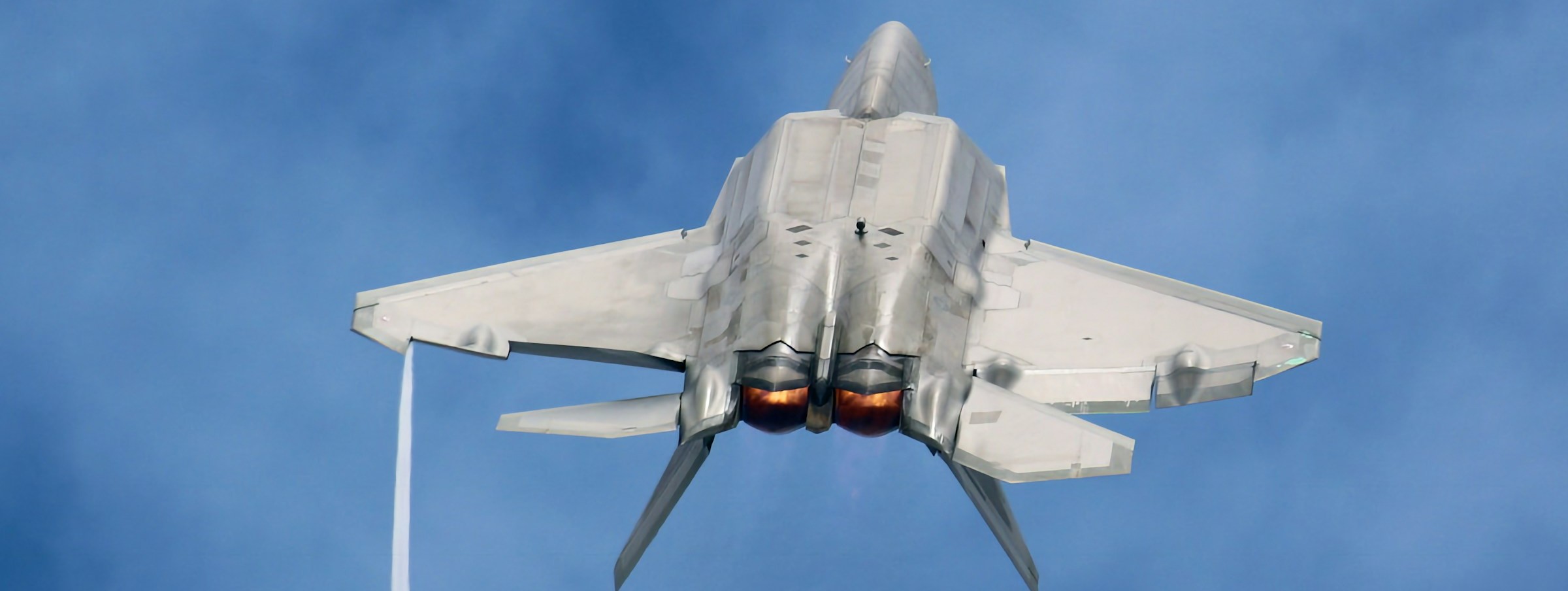
USAF Picks General Atomics & Anduril for CCA “Increment 1” Loyal Wingman Production
The U.S. Air Force made its landmark production decision for Increment 1 of the Collaborative Combat Aircraft (CCA) programme in June 2026, awarding production contracts to both General Atomics and Anduril in a “split buy”. The two vendors will together build the first 150+ AI-piloted loyal wingman drones.
Anduril’s Fury and General Atomics’ design (referred to as “Dark Merlin” in trade reporting) will both enter production. The USAF is keeping both industrial teams alive, preserving competition for future increments and hedging against either design underperforming.
This is the first production commitment anywhere for an autonomous air-combat teammate, operationalising the manned-unmanned teaming concept that underpins the entire NGAD family of systems. Officials have spoken of “hundreds to thousands” of aircraft across future increments.
USAF Picks General Atomics & Anduril for CCA “Increment 1” Loyal Wingman Production
The U.S. Air Force made its landmark production decision for Increment 1 of the Collaborative Combat Aircraft (CCA) programme in June 2026, awarding production contracts to both General Atomics and Anduril in a “split buy”. The two vendors will together build the first 150+ AI-piloted loyal wingman drones.
Anduril’s Fury and General Atomics’ design (referred to as “Dark Merlin” in trade reporting) will both enter production. The USAF is keeping both industrial teams alive, preserving competition for future increments and hedging against either design underperforming.
This is the first production commitment anywhere for an autonomous air-combat teammate, operationalising the manned-unmanned teaming concept that underpins the entire NGAD family of systems. Officials have spoken of “hundreds to thousands” of aircraft across future increments.
Full Story
Defense Security Monitor (June 29, 2026) reported the production-contract award to both Anduril and General Atomics for 150+ CCA aircraft. Shephard’s programme profile confirmed the split-buy structure. Inside Unmanned Systems reported that both designs enter production simultaneously.
CCA is the unmanned pillar of the Next Generation Air Dominance (NGAD) family of systems. Increment 1 aircraft are conceived as sensor/shooter trucks carrying sensors, jamming pods, and air-to-air weapons in support of a manned lead — flying alongside F-35As and eventually the F-47.
The split-buy is notable because the Air Force’s acquisition philosophy emphasises cost (~$25–30M per aircraft at rate), speed, and technology refresh on a cadence rather than a 30-year manned-fighter cycle. Future increments are expected to expand into electronic warfare, strike, and broader multi-mission roles.
Sources
 Defense · Conflict · Throughout June 2026
Ukraine’s June Sets Record for Deep-Strike Drone Warfare — Over 120 Russian Air-Defence Systems Struck
June 2026 was a record-breaking month for UAV warfare in the Russia-Ukraine conflict. Ukrainian long-range drone swarms struck deep into Russia, hitting oil refineries, air-defence systems, and naval assets in Crimea. Ukraine’s Unmanned Systems Forces reported striking over 120 Russian air-defence systems during the month.
Russia’s Defence Ministry claimed to have destroyed ~660 Ukrainian drones overnight on June 26 alone — a figure that reflects the extraordinary tempo of swarm launches. Ukraine’s air defences, in turn, intercepted close to 90% of incoming Russian aerial threats during June’s large-scale attacks.
The campaign validates the swarm-overload tactic reshaping air-defence doctrine worldwide, and is being closely studied by NATO air forces racing to solve the same counter-UAS problems with programmes like CCA and directed-energy weapons.
Ukraine’s June Sets Record for Deep-Strike Drone Warfare — Over 120 Russian Air-Defence Systems Struck
June 2026 was a record-breaking month for UAV warfare in the Russia-Ukraine conflict. Ukrainian long-range drone swarms struck deep into Russia, hitting oil refineries, air-defence systems, and naval assets in Crimea. Ukraine’s Unmanned Systems Forces reported striking over 120 Russian air-defence systems during the month.
Russia’s Defence Ministry claimed to have destroyed ~660 Ukrainian drones overnight on June 26 alone — a figure that reflects the extraordinary tempo of swarm launches. Ukraine’s air defences, in turn, intercepted close to 90% of incoming Russian aerial threats during June’s large-scale attacks.
The campaign validates the swarm-overload tactic reshaping air-defence doctrine worldwide, and is being closely studied by NATO air forces racing to solve the same counter-UAS problems with programmes like CCA and directed-energy weapons.
Full Story
NV.ua, citing the Wall Street Journal, framed June as setting the record for deep strikes. United24 Media reported that Ukrainian drone swarms are systematically overloading Russian air defences. Ukrinform cited 32 Russian military air-defence systems struck in a specific count, with over 120 systems/elements hit in total during June.
On June 26, the Security Service of Ukraine (SBU) struck Russian navy ships and air-defence radars in Kerch, Crimea. Ukraine’s Ministry of Defence reported intercepting nearly 90% of aerial threats during June’s large-scale Russian attacks.
The operational pattern — swarm saturation degrading a layered, radar/SAM-based integrated air defence — is the clearest live-fire validation of the loyal-wingman and counter-UAS problems the U.S. and NATO are racing to solve. It is reshaping air-defence doctrine, procurement priorities, and the calculus of how much any layered defence can absorb.
Sources
Robotics & AI
 AI · Frontier Labs · June 1 & 8, 2026
Anthropic & OpenAI Both File Confidential IPO Paperwork in June — Frontier AI Goes Public
On June 1, Anthropic confidentially submitted a draft S-1 registration statement to the SEC, making it the first major AI lab to formally begin the IPO process. One week later, on June 8, OpenAI filed its own confidential IPO paperwork — setting up a public-markets race between the two leading U.S. frontier labs.
Anthropic’s filing was reportedly valued at ~$965 billion. Prediction markets (Polymarket) put the probability of Anthropic completing its IPO by end of 2026 at roughly 78%. OpenAI’s filing came on the same day as Apple’s WWDC keynote.
The back-to-back filings signal that frontier-model builders are seeking public-market access to fund compute build-outs at a scale private markets alone cannot finance, amid a rapidly tightening AI regulatory environment.
Anthropic & OpenAI Both File Confidential IPO Paperwork in June — Frontier AI Goes Public
On June 1, Anthropic confidentially submitted a draft S-1 registration statement to the SEC, making it the first major AI lab to formally begin the IPO process. One week later, on June 8, OpenAI filed its own confidential IPO paperwork — setting up a public-markets race between the two leading U.S. frontier labs.
Anthropic’s filing was reportedly valued at ~$965 billion. Prediction markets (Polymarket) put the probability of Anthropic completing its IPO by end of 2026 at roughly 78%. OpenAI’s filing came on the same day as Apple’s WWDC keynote.
The back-to-back filings signal that frontier-model builders are seeking public-market access to fund compute build-outs at a scale private markets alone cannot finance, amid a rapidly tightening AI regulatory environment.
Full Story
Anthropic posted an official announcement on its news page. CNBC ran a same-day story; Axios confirmed the confidential filing. Yahoo Finance reported the ~$965 billion valuation figure. TechCrunch reported OpenAI’s filing on June 8 under the headline “Following Anthropic, OpenAI files confidentially for IPO.”
Under the JOBS Act confidential-submission process, the detailed financials are not yet public. What is clear is the timing: the two leading U.S. frontier labs are racing each other to public markets within the same calendar window, mirroring the parallel model-release cadence that has characterised the frontier-model competition throughout 2026.
The filings represent a structural shift from privately funded research labs toward publicly traded entities — with all the transparency, governance, and regulatory scrutiny that entails. For the aerospace and defence community, this matters because frontier AI models are increasingly embedded in defence, autonomous systems, and industrial applications.
Sources
AI · Regulation · June 12–30, 2026U.S. Orders Anthropic to Suspend Claude Models — First Frontier-AI Export Control Action
On June 12, the U.S. Commerce Department issued a national-security export-control directive requiring Anthropic to immediately suspend customer access to its Claude Fable 5 and Claude Mythos 5 models. Anthropic disabled access worldwide because it could not verify user nationality in real time.
BBC reported Anthropic executives were summoned to meet senior White House officials. Forbes linked the suspension to a reported jailbreak of the model. On June 30, the Trump administration lifted the controls and Anthropic restored access customer-by-customer.
This is arguably the most significant AI-governance event of the year: the first time the U.S. government used national-security export-control authority to force a frontier lab to pull a publicly released model offline — effectively treating a frontier LLM as a controlled dual-use technology.
U.S. Orders Anthropic to Suspend Claude Models — First Frontier-AI Export Control Action
On June 12, the U.S. Commerce Department issued a national-security export-control directive requiring Anthropic to immediately suspend customer access to its Claude Fable 5 and Claude Mythos 5 models. Anthropic disabled access worldwide because it could not verify user nationality in real time.
BBC reported Anthropic executives were summoned to meet senior White House officials. Forbes linked the suspension to a reported jailbreak of the model. On June 30, the Trump administration lifted the controls and Anthropic restored access customer-by-customer.
This is arguably the most significant AI-governance event of the year: the first time the U.S. government used national-security export-control authority to force a frontier lab to pull a publicly released model offline — effectively treating a frontier LLM as a controlled dual-use technology.
Full Story
BBC published on the Anthropic–White House meeting. Forbes reported the Fable 5 / Mythos 5 disablement and its link to a reported jailbreak. The Bulletin of the Atomic Scientists published analysis on why AI models defy traditional export-control frameworks. Cybersecurity Dive reported criticism of the government’s move from cybersecurity experts.
Because Anthropic had no mechanism to verify user nationality in real time across its API, the company globally disabled access rather than attempt nationality-based filtering — a meaningful precedent for how export controls interact with cloud API access to frontier models.
The ~18-day arc (June 12 suspension → June 30 lifting) sets a precedent: frontier models can be subject to sudden, national-security-based access suspension and then restored. This will materially affect how defence-AI vendors and autonomous-systems integrators architect model access for allied vs. non-allied users.
Sources
AI · EU Regulation · June 16, 2026EU Parliament Votes 423–57 to Approve Digital Omnibus AI Act Amendments
On June 16, 2026, the European Parliament voted 423 to 57 to approve “Digital Omnibus” amendments to the EU AI Act, the flagship European AI regulation. The vote is the last major legislative adjustment before the Act’s main application date of August 2, 2026.
The EU AI Act entered into force on August 1, 2024, and becomes fully applicable on August 2, 2026. The June amendments adjust the regulatory framework ahead of that enforcement date, with implications for high-risk AI classifications and GPAI model obligations.
The amendments matter to industrial robotics and defence-AI vendors because the AI Act’s high-risk classifications capture safety-critical and biometric AI uses. Any changes to conformity-assessment paths or GPAI obligations directly affect what companies must do to place AI systems on the EU market.
EU Parliament Votes 423–57 to Approve Digital Omnibus AI Act Amendments
On June 16, 2026, the European Parliament voted 423 to 57 to approve “Digital Omnibus” amendments to the EU AI Act, the flagship European AI regulation. The vote is the last major legislative adjustment before the Act’s main application date of August 2, 2026.
The EU AI Act entered into force on August 1, 2024, and becomes fully applicable on August 2, 2026. The June amendments adjust the regulatory framework ahead of that enforcement date, with implications for high-risk AI classifications and GPAI model obligations.
The amendments matter to industrial robotics and defence-AI vendors because the AI Act’s high-risk classifications capture safety-critical and biometric AI uses. Any changes to conformity-assessment paths or GPAI obligations directly affect what companies must do to place AI systems on the EU market.
Full Story
The European Commission’s official digital-strategy page confirms the AI Act’s August 2, 2026 full-application date. The Digital Omnibus amendment process was reported by Pearl Cohen and McCann FitzGerald in early June legal commentary.
The amendments adjust definitions, conformity-assessment paths, and general-purpose AI (GPAI) model obligations. For companies building AI into aerospace, defence, or industrial systems, the Act’s high-risk category captures a wide range of safety-critical applications.
June 2026 was therefore the final full month for substantive amendment before core enforcement begins. Companies deploying AI in the EU market needed to use this window to align their compliance programmes.
Sources
Robotics · Humanoid · June 30, 2026Apptronik Unveils Apollo 2 Humanoid & 90,000 sq ft “Robot Park” Data Factory
On June 30, 2026, Austin-based Apptronik unveiled its next-generation Apollo 2 humanoid robot and announced “Robot Park,” a 90,000-square-foot physical-AI data factory for training humanoid robots. Reuters reported both the training-hub launch and the Apollo 2 unveiling.
Apollo 2 was introduced in both bipedal and wheeled configurations, broadening its addressable industrial applications. Forbes additionally reported CEO Jeff Cardenas teasing Apollo 3 as the next generation.
Apptronik (backed by >$520 million and partnered with contract manufacturer Jabil) is one of the leading U.S. humanoid contenders alongside Figure and Tesla Optimus. The “data factory” framing underscores that the humanoid race is as much about training data at scale as it is about hardware.
Apptronik Unveils Apollo 2 Humanoid & 90,000 sq ft “Robot Park” Data Factory
On June 30, 2026, Austin-based Apptronik unveiled its next-generation Apollo 2 humanoid robot and announced “Robot Park,” a 90,000-square-foot physical-AI data factory for training humanoid robots. Reuters reported both the training-hub launch and the Apollo 2 unveiling.
Apollo 2 was introduced in both bipedal and wheeled configurations, broadening its addressable industrial applications. Forbes additionally reported CEO Jeff Cardenas teasing Apollo 3 as the next generation.
Apptronik (backed by >$520 million and partnered with contract manufacturer Jabil) is one of the leading U.S. humanoid contenders alongside Figure and Tesla Optimus. The “data factory” framing underscores that the humanoid race is as much about training data at scale as it is about hardware.
Full Story
Reuters reported on June 30 that Apptronik launched a new robot training hub and unveiled Apollo 2. Forbes published CEO Jeff Cardenas’s announcement of the 90,000-sq-ft physical-AI data factory and the Apollo 3 tease.
Apollo 2’s bipedal-and-wheeled product-line choice mirrors the broader industry’s split between pure-bipedal humanoids and wheeled variants favoured for cost-sensitive warehouse work. Apptronik’s Apollo product page describes the robot as using patented actuator technology for “powerful, efficient, and precise motion.”
With Jabil as contract manufacturer and >$500M in funding, Apptronik is positioned in the same commercial-deployment cohort as Figure (BMW Spartanburg) and ahead of Tesla Optimus’s stated volume-production timeline. The data-factory model — purpose-built facilities for collecting teleoperated demonstration data at scale — may become the standard approach for the whole industry.
Sources
All stories above are based on reporting from primary news outlets (Reuters, BBC, SpaceNews, FlightGlobal, NASA, etc.) during June 2026. Full source links are available in the expanded detail for each story.