
August 2026 was a month of contrasts. China lost a Long March 7A at Max-Q — then recovered its second reusable booster within five weeks. Ariane 6 flew its first geostationary mission as NASA conceded the Swift Observatory could not be saved. The USS Theodore Roosevelt became the first carrier built for drone warfare control, while a $275 billion battleship estimate reignited the Navy's force-structure debate. Agentic AI reached every paid Claude account, Gemini landed inside Chrome — and Nvidia raised the price of the compute underpinning it all. Read on for the details.
Aviation
 Aviation · Orders · August 11, 2026
Boeing's July Order Book Led by Farnborough Deals — Uganda Airlines and AerCap Headline
Boeing's July order figures, published August 11, were dominated by agreements unveiled during the Farnborough Airshow — with Uganda Airlines and lessor AerCap the most prominent names of the month.
The orders reinforced steady demand for the 737 MAX family even as the manufacturer continues to operate under FAA production-rate oversight and uncertified MAX 7 and MAX 10 variants.
The Farnborough-anchored order flow caps a period in which Boeing has clawed back delivery momentum, with year-to-date deliveries running well ahead of the prior year.
Boeing's July Order Book Led by Farnborough Deals — Uganda Airlines and AerCap Headline
Boeing's July order figures, published August 11, were dominated by agreements unveiled during the Farnborough Airshow — with Uganda Airlines and lessor AerCap the most prominent names of the month.
The orders reinforced steady demand for the 737 MAX family even as the manufacturer continues to operate under FAA production-rate oversight and uncertified MAX 7 and MAX 10 variants.
The Farnborough-anchored order flow caps a period in which Boeing has clawed back delivery momentum, with year-to-date deliveries running well ahead of the prior year.
Full Story
Boeing's monthly orders-and-deliveries report for July 2026 confirmed that the Uganda Airlines and AerCap agreements — both unveiled during the July 20–24 Farnborough International Airshow — featured prominently in the month's gross orders. The African carrier's deal marked one of the show's headline airline commitments, while the AerCap transaction continued the pattern of lessor demand that has underpinned widebody and narrowbody books alike.
The July figures extend a 2026 trend in which Boeing has narrowed its delivery gap with Airbus. Year-to-date deliveries have been tracking roughly 12% above the prior year, reflecting the slow normalisation of supply chains and the company's recovery from the 2024 production and quality-control disruptions that capped 737 output.
Challenges remain: the 777X certification timeline continues to slip — multiple reports now doubt certification before the end of 2026 — and the MAX 7 and MAX 10 remain uncertified. But the order book's depth, now comfortably above 6,000 aircraft, signals that airline confidence in Boeing's product line has largely survived its production troubles.
Sources
- FlightGlobal
- Boeing orders and deliveries data
- The Air Current
 Aviation · Heritage · August 22–23, 2026
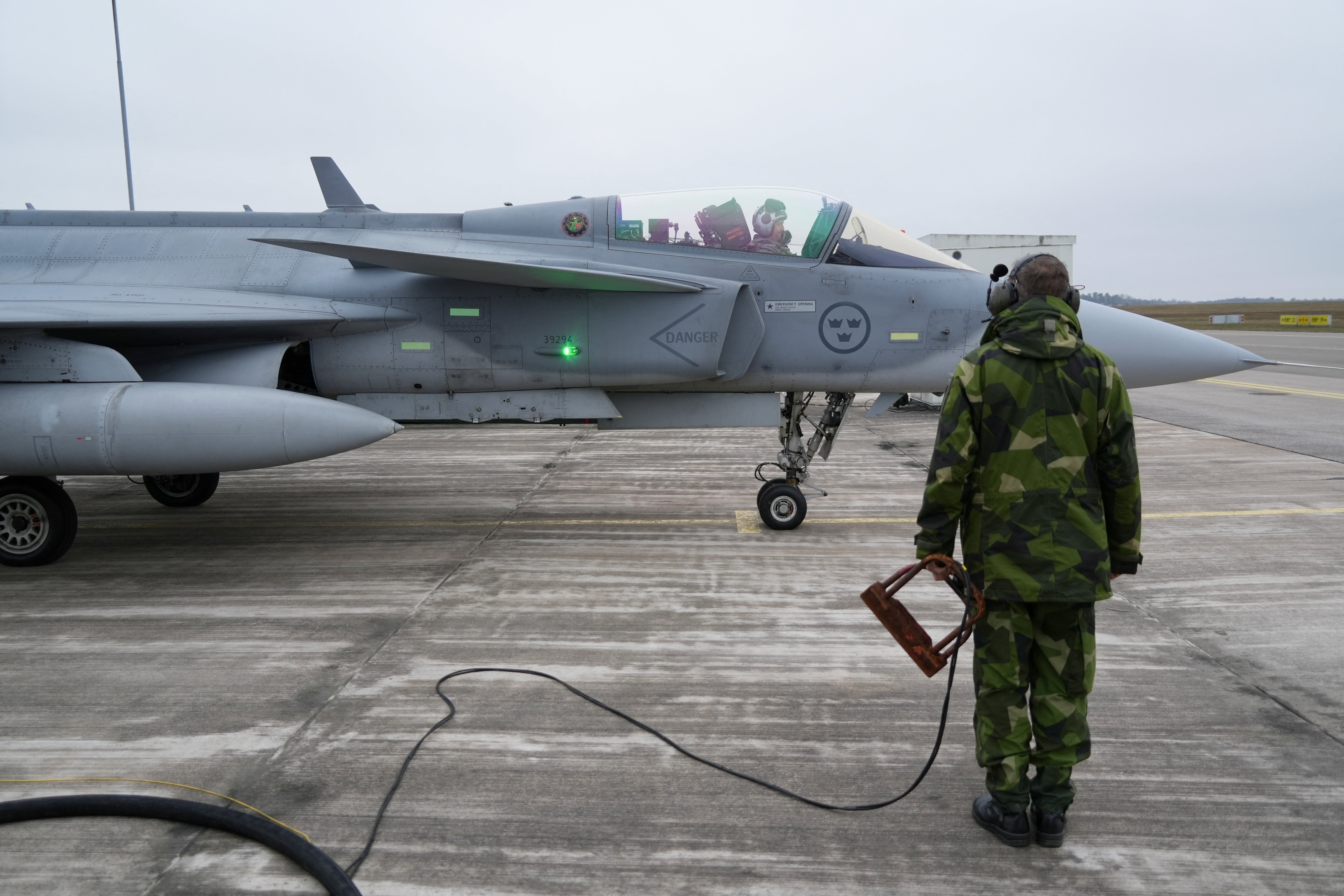
Swedish Air Force Marks 100 Years with Centenary Airshow at Linköping
The Swedish Air Force — Flygvapnet — celebrated its 100th anniversary with a major international airshow at Linköping on August 22–23, 2026.
The centenary event showcased the full span of Swedish air power, from historic types to the JAS 39 Gripen, and drew participation from allied air forces across Europe.
The milestone comes as Sweden deepens its integration into NATO air defence and as Saab teases a new loyal-wingman drone concept intended for Swedish service.
Swedish Air Force Marks 100 Years with Centenary Airshow at Linköping
The Swedish Air Force — Flygvapnet — celebrated its 100th anniversary with a major international airshow at Linköping on August 22–23, 2026.
The centenary event showcased the full span of Swedish air power, from historic types to the JAS 39 Gripen, and drew participation from allied air forces across Europe.
The milestone comes as Sweden deepens its integration into NATO air defence and as Saab teases a new loyal-wingman drone concept intended for Swedish service.
Full Story
Sweden's air force officially turned 100 in 2026, and the anniversary airshow at Linköping — home of Saab's aviation operations — served as both a celebration and a statement of the service's transformation from Cold War neutrality to full NATO integration.
Flying displays spanned the service's history, with heritage formations alongside current JAS 39 Gripen C/D and E variants and visiting teams from partner nations. The event also functioned as an informal industry showcase, with Saab using the centenary moment to display its emerging loyal-wingman unmanned aircraft concept for the Swedish Air Force.
One hundred years on, Flygvapnet's strategic context has inverted: a force once organised around neutral territorial defence now operates within allied command structures, hosts NATO reinforcements, and is procuring GlobalEye surveillance aircraft and additional Gripen E fighters to anchor the alliance's northern flank.
Sources
- Försvarsmakten (Swedish Armed Forces)
- European Airshows
- Wikipedia — 2026 in aviation
- Saab
 Aviation · Networks · August 2026
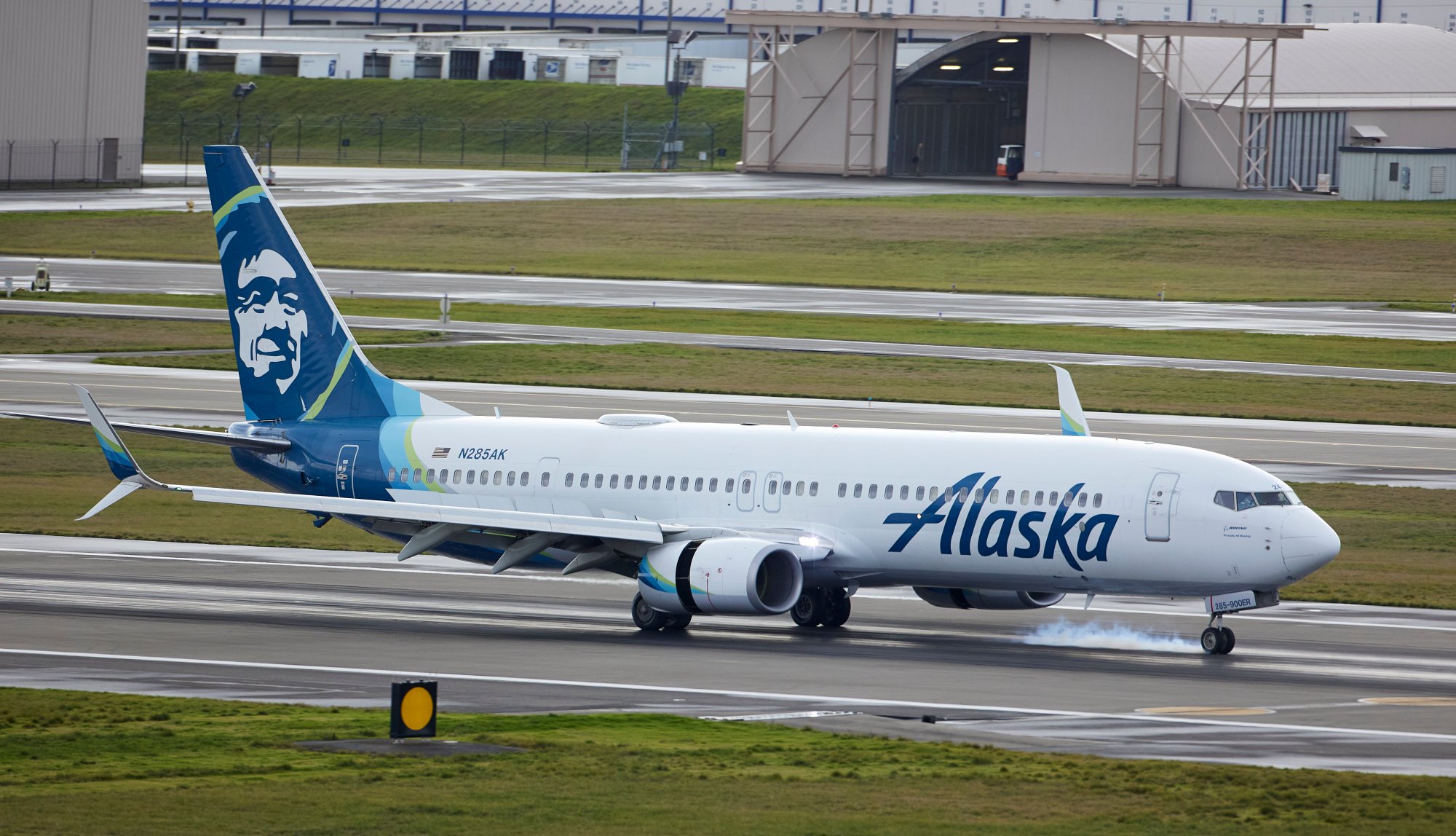
Alaska Airlines Presses Its European Expansion
Alaska Airlines continued its European network expansion through the summer, building on the transatlantic routes it has launched from its Seattle hub since acquiring Hawaiian Airlines.
The push makes the Seattle-based carrier a new competitor in the premium transatlantic leisure market long dominated by the Big Three US carriers and their joint-venture partners.
The expansion is enabled by the merged group's widebody fleet and loyalty scale — a rare case of airline consolidation directly producing new long-haul competition.
Alaska Airlines Presses Its European Expansion
Alaska Airlines continued its European network expansion through the summer, building on the transatlantic routes it has launched from its Seattle hub since acquiring Hawaiian Airlines.
The push makes the Seattle-based carrier a new competitor in the premium transatlantic leisure market long dominated by the Big Three US carriers and their joint-venture partners.
The expansion is enabled by the merged group's widebody fleet and loyalty scale — a rare case of airline consolidation directly producing new long-haul competition.
Full Story
August 2026 coverage in FlightGlobal and trade press highlighted Alaska Airlines' continued European expansion — the outward sign of a strategy set in motion by its acquisition of Hawaiian Airlines and the combined group's access to widebody aircraft and a strengthened loyalty programme.
From Seattle, the carrier has been layering European destinations onto a network historically built around West Coast point-to-point flying. The strategy targets the premium leisure and VFR (visiting friends and relatives) segments, using the Hawaiian Airlines A330 fleet and Boeing 787s on order, and leverages membership scale from the merged loyalty platforms.
For the transatlantic market, the significance is structural: a fifth US competitor with a genuinely different cost base and hub geography. For passengers in the Pacific Northwest, it converts what was routinely a connection through another carrier's hub into nonstop access to Europe — and it signals that the Alaska-Hawaiian merger's consumer benefit case is, at least on long-haul, materialising.
Sources
- FlightGlobal
- Alaska Airlines
- Seattle Times business coverage
Space
 Space · Failure · August 10, 2026
Long March 7A Disintegrates at Max-Q — ChinaSat 4B Lost in Rare CASC Failure
A Long March 7A rocket broke apart during ascent from Wenchang on August 10, disintegrating as it passed through Max-Q and destroying its ChinaSat 4B communications satellite payload.
The loss was China's first major orbital launch failure of 2026 and one of the few blemishes on an otherwise high-cadence CASC launch year.
ChinaSat 4B (ST-3B) was a communications satellite intended for geostationary service; the failure interrupts an otherwise steady replacement cycle in China's satcom fleet.
Long March 7A Disintegrates at Max-Q — ChinaSat 4B Lost in Rare CASC Failure
A Long March 7A rocket broke apart during ascent from Wenchang on August 10, disintegrating as it passed through Max-Q and destroying its ChinaSat 4B communications satellite payload.
The loss was China's first major orbital launch failure of 2026 and one of the few blemishes on an otherwise high-cadence CASC launch year.
ChinaSat 4B (ST-3B) was a communications satellite intended for geostationary service; the failure interrupts an otherwise steady replacement cycle in China's satcom fleet.
Full Story
The Long March 7A lifted off from Wenchang Launch Complex 2 on August 10, 2026, carrying the ChinaSat 4B communications satellite. The vehicle disintegrated while passing through Max-Q — the point of maximum aerodynamic stress — producing debris that fell within designated downrange zones. No injuries were reported.
Launch failures have become rare for CASC as the Long March fleet industrialised, making the event notable both commercially and for the programme's reliability record. The Long March 7A is China's workhorse launcher for medium-to-heavy geostationary and BeiDou-class missions, and an anomaly investigation will temporarily slow that manifest.
For China's satellite fleet, the loss of ChinaSat 4B (also designated ST-3B, a SpaceTech-built communications satellite) removes a planned capacity addition in geostationary orbit. Insurance markets, which have had a quiet year, will absorb the claim while CASC works the failure — a reminder that even maturing launch systems operate at the edge of structural and thermal limits.
Sources
- Wikipedia — List of spaceflight launches in July–September 2026
- CASC
- SpaceNews
- Nasaspaceflight.com
 Space · Reusability · August 18, 2026
LandSpace's Zhuque-3 Recovers Its Booster — Second Chinese Reusable Launcher
LandSpace's Zhuque-3 completed a successful orbital launch on August 18 and recovered its first stage — making it the second Chinese launcher to achieve first-stage recovery.
The feat follows China's Long March 10B sea-net booster catch in July, and demonstrates that propulsive booster recovery is spreading rapidly across China's commercial launch sector.
Zhuque-3, powered by methane-fuelled TQ-12 engines, is LandSpace's bet on rapid-reuse economics for the growing Chinese small- and medium-satellite market.
LandSpace's Zhuque-3 Recovers Its Booster — Second Chinese Reusable Launcher
LandSpace's Zhuque-3 completed a successful orbital launch on August 18 and recovered its first stage — making it the second Chinese launcher to achieve first-stage recovery.
The feat follows China's Long March 10B sea-net booster catch in July, and demonstrates that propulsive booster recovery is spreading rapidly across China's commercial launch sector.
Zhuque-3, powered by methane-fuelled TQ-12 engines, is LandSpace's bet on rapid-reuse economics for the growing Chinese small- and medium-satellite market.
Full Story
The August 18 mission saw Zhuque-3 deliver its payload to orbit and then execute a powered descent and landing of its first stage — the second successful recovery of an orbital-class booster by a Chinese operator, after the Long March 10B's historic net-catch in July 2026.
Zhuque-3 is a stainless-steel, methalox-fuelled launcher whose TQ-12 engine family was designed from the start for reuse, mirroring the architectural bets that made SpaceX's Falcon 9 economical. LandSpace has articulated a vision of high-cadence flight with reflown boosters serving China's commercial constellation programmes.
Two Chinese first-stage recoveries within five weeks — one by a state prime, one by a startup — mark an inflection: reusable launch is no longer a US monopoly but a baseline capability being industrialised in China. For the global launch market, that means the cost curve everyone else competes against is about to steepen again.
Sources
- Wikipedia — 2026 in spaceflight
- LandSpace
- SpaceNews
 Space · Europe · August 27, 2026
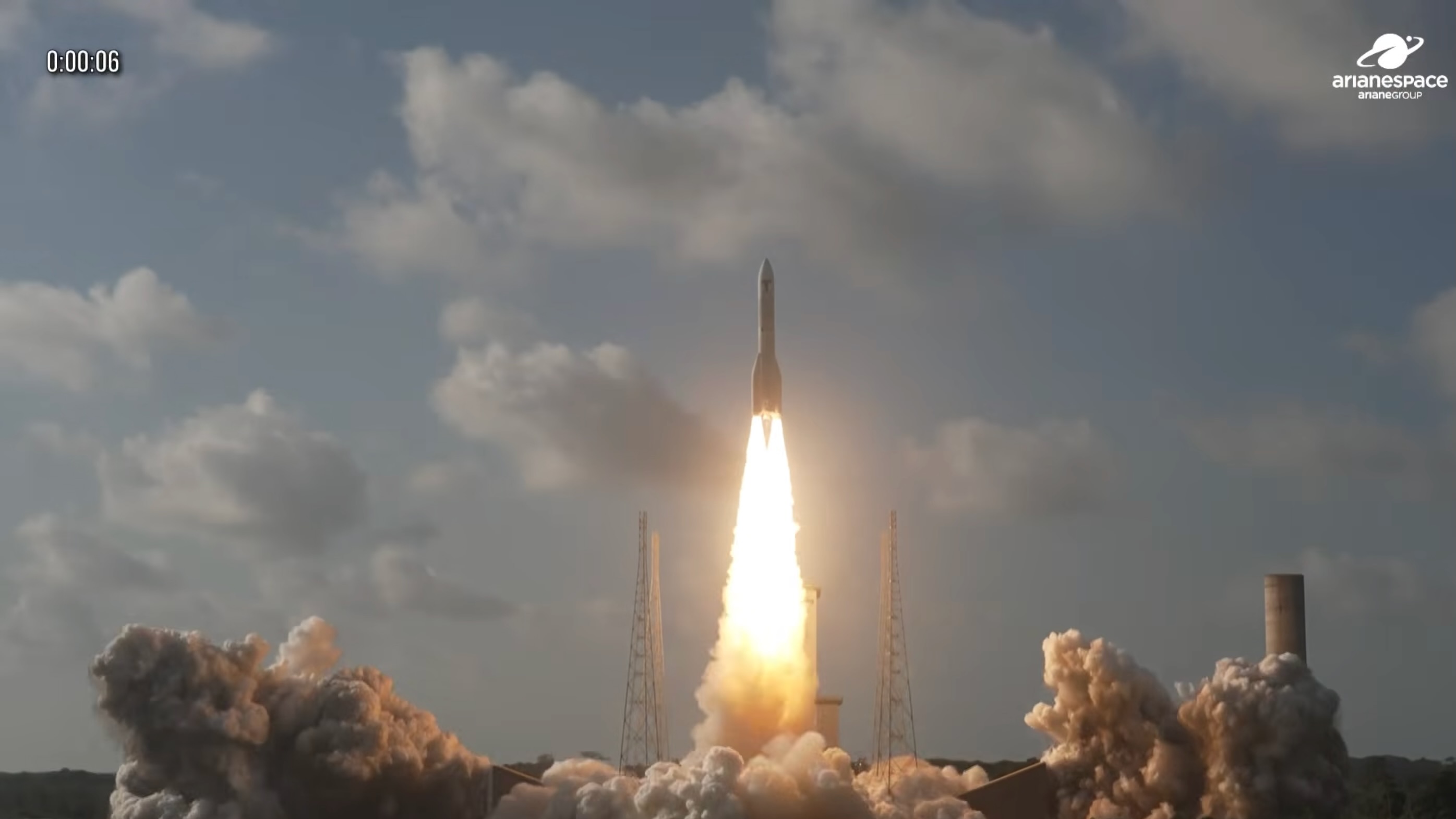
Ariane 6 Flies Its First Geostationary Mission — MTG-I2 Completes Europe's Weather Trio
Ariane 6 performed its first geostationary transfer mission on August 27, delivering Europe's MTG-I2 (Meteosat-14) weather satellite — the final spacecraft of the first Meteosat Third Generation imaging trio.
The mission is a milestone for Europe's flagship new launcher, validating the profile it must fly for commercial GEO customers and institutional missions alike.
With the full MTG imaging trio on orbit, Europe's weather forecasting and severe-storm warning capability takes a generational step forward.
Ariane 6 Flies Its First Geostationary Mission — MTG-I2 Completes Europe's Weather Trio
Ariane 6 performed its first geostationary transfer mission on August 27, delivering Europe's MTG-I2 (Meteosat-14) weather satellite — the final spacecraft of the first Meteosat Third Generation imaging trio.
The mission is a milestone for Europe's flagship new launcher, validating the profile it must fly for commercial GEO customers and institutional missions alike.
With the full MTG imaging trio on orbit, Europe's weather forecasting and severe-storm warning capability takes a generational step forward.
Full Story
The August 27 launch from Kourou was Ariane 6's first mission to geostationary transfer orbit — the profile that defines the commercial heavy-lift market. Aboard was MTG-I2, the second imager of Eumetsat and ESA's Meteosat Third Generation programme, which will operate as Meteosat-14 over Europe and Africa.
Completing the first MTG imaging trio transforms European meteorology: the constellation's full-disc imagery, lightning mapping, and infrared sounding enable earlier severe-weather warnings and sharper climate records for Europe, Africa, and the Atlantic.
For Ariane 6, the flight matters beyond its payload. A clean GEO debut demonstrates the vehicle's upper-stage restart and precise injection capabilities to commercial satellite operators — the customers Europe needs if the launcher is to hold market share against Falcon 9 and the upcoming generation of reusable Chinese vehicles. Europe's space agenda also closes the month with the controlled reentries of the final two Cluster II satellites (August 31–September 1), observed by an airborne campaign as a pathfinder for responsible end-of-life disposal.
Sources
- Wikipedia — 2026 in spaceflight
- Arianespace
- ESA
- Eumetsat
 Space · Science · August 19, 2026
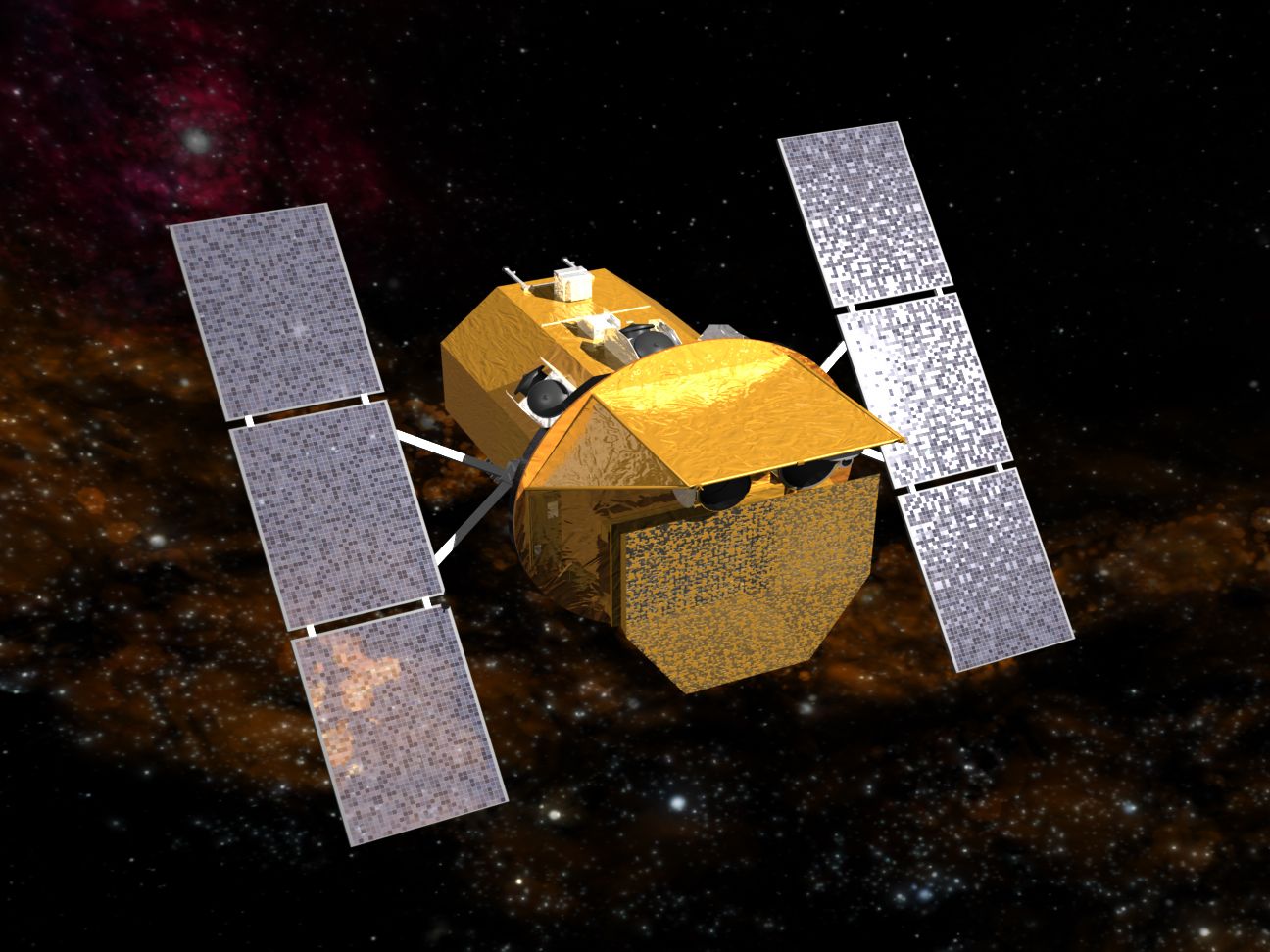
NASA Cancels Swift Observatory Rescue — A 22-Year Gamma-Ray Era Nears Its End
NASA announced on August 19 that it had cancelled efforts to reboost the Neil Gehrels Swift Observatory, ending the rescue attempt mounted after July's final Pegasus XL launch.
The Katalyst-built LINK servicing spacecraft, launched July 3 to grapple and reboost Swift, suffered technical problems in orbit that made the save unachievable.
Swift — hunting gamma-ray bursts since 2004 — is now expected to reenter in the coming years, while NASA's newer astrophysics fleet picks up part of its time-domain mission.
NASA Cancels Swift Observatory Rescue — A 22-Year Gamma-Ray Era Nears Its End
NASA announced on August 19 that it had cancelled efforts to reboost the Neil Gehrels Swift Observatory, ending the rescue attempt mounted after July's final Pegasus XL launch.
The Katalyst-built LINK servicing spacecraft, launched July 3 to grapple and reboost Swift, suffered technical problems in orbit that made the save unachievable.
Swift — hunting gamma-ray bursts since 2004 — is now expected to reenter in the coming years, while NASA's newer astrophysics fleet picks up part of its time-domain mission.
Full Story
The decision, reported August 19, closed a brief chapter in ambitious low-cost servicing: the LINK spacecraft, launched on the final Pegasus XL flight specifically to extend the Neil Gehrels Swift Observatory's life, encountered technical problems after reaching orbit that left the reboost beyond recovery.
Swift has been one of NASA's most productive small observatories — more than two decades of rapid-response gamma-ray burst follow-up, multi-wavelength alerts that shaped time-domain astronomy, and discoveries spanning black hole births to gravitational-wave counterparts. Its loss, when it comes, removes a uniquely fast-reacting eye.
The broader August context softens the blow: NASA's Pandora exoplanet telescope completed commissioning and began science observations this month, and the Roman Space Telescope — after a slip — is on track for a September launch. But the episode also underscores how hard on-orbit servicing remains; the industry's commercial servicing plans have grown faster than the demonstrated success rate.
Sources
- NASA
- Wikipedia — 2026 in spaceflight
- Katalyst Space Technologies
- SpaceNews
 Space · Military · August 16, 2026
USSF-366 Lofts 23 Modified Starshields — Suspected Space Data Network Backbone
A Falcon 9 launched the USSF-366 mission on August 16, carrying 23 modified Starshield satellites suspected to form the new Starshield-based Space Data Network Backbone.
The deployment marks a major step in the Space Force's pivot toward proliferated military constellations built on commercial bus designs.
The same day saw a Globalstar replenishment launch — evidence of Falcon 9's unmatched ability to serve government and commercial constellation programmes simultaneously.
USSF-366 Lofts 23 Modified Starshields — Suspected Space Data Network Backbone
A Falcon 9 launched the USSF-366 mission on August 16, carrying 23 modified Starshield satellites suspected to form the new Starshield-based Space Data Network Backbone.
The deployment marks a major step in the Space Force's pivot toward proliferated military constellations built on commercial bus designs.
The same day saw a Globalstar replenishment launch — evidence of Falcon 9's unmatched ability to serve government and commercial constellation programmes simultaneously.
Full Story
The August 16 Vandenberg launch deployed USA-620 through 642 — 23 modified Starshield spacecraft that observers identify with the Space Data Network Backbone, a proliferated communications layer intended to move sensor and targeting data across military constellations with Starlink-like resilience.
The mission crystallises the Pentagon's architectural shift: rather than exquisite single satellites, the Space Force is buying mass-produced, rapidly refreshable nodes. The Starshield-derived design leverages SpaceX's manufacturing base, and the classified payloads reportedly include inter-satellite optical links and encrypted transmitters tailored for joint-allied distribution.
August 16's second Falcon 9 flight — carrying eight Globalstar-2R refresh satellites from Cape Canaveral — rounded out a day that illustrated the launcher's dual role sustaining both commercial constellations and national-security architectures. With 25 orbital launches worldwide in August and USSF-366 among the most consequential, the pattern is clear: orbit is being industrialised, and military space is riding the same wave.
Sources
- Wikipedia — List of spaceflight launches in July–September 2026
- SpaceX
- U.S. Space Force
- SpaceNews
Defense
 Defense · Carrier Aviation · August 10, 2026
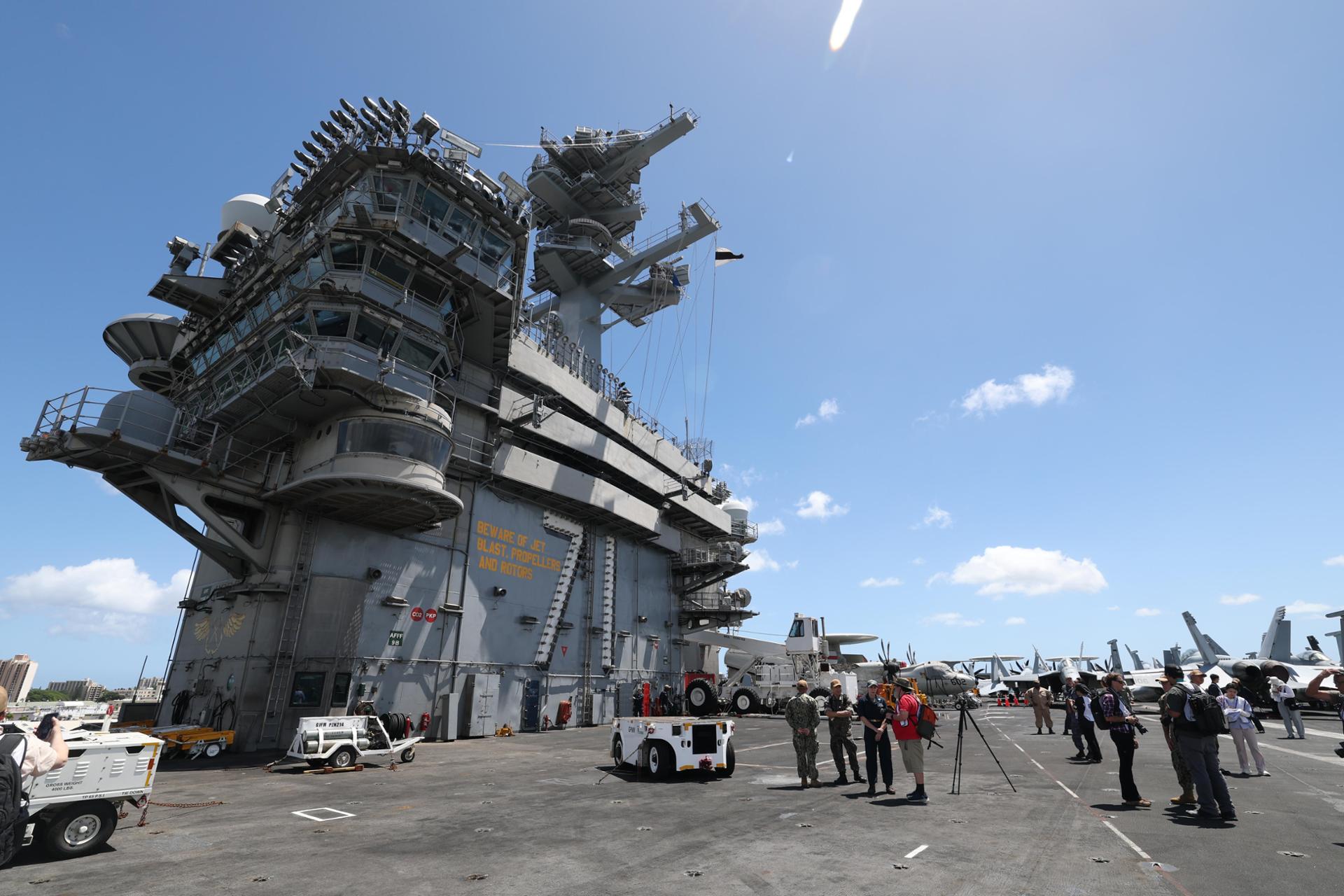
USS Theodore Roosevelt Becomes First Carrier with Built-In Unmanned Air Warfare Center
The USS Theodore Roosevelt became the first US Navy aircraft carrier to operate with a permanently installed Unmanned Air Warfare Center (UAWC) — a dedicated control hub for carrier-based drones.
The UAWC gives the carrier's crew purpose-built spaces to plan, control, and debrief unmanned air operations rather than improvising them from temporary fittings.
The milestone operationalises the Navy's vision of manned-unmanned air wings, with MQ-25 Stingray tankers and future collaborative combat aircraft integrated into carrier cycles.
USS Theodore Roosevelt Becomes First Carrier with Built-In Unmanned Air Warfare Center
The USS Theodore Roosevelt became the first US Navy aircraft carrier to operate with a permanently installed Unmanned Air Warfare Center (UAWC) — a dedicated control hub for carrier-based drones.
The UAWC gives the carrier's crew purpose-built spaces to plan, control, and debrief unmanned air operations rather than improvising them from temporary fittings.
The milestone operationalises the Navy's vision of manned-unmanned air wings, with MQ-25 Stingray tankers and future collaborative combat aircraft integrated into carrier cycles.
Full Story
Reported in August 2026, the installation aboard USS Theodore Roosevelt converts the carrier-drone concept from experiment to infrastructure. The Unmanned Air Warfare Center provides dedicated, hardened spaces for unmanned mission control — staffing positions, data links, and debrief facilities purpose-built for persistent drone operations at sea.
The centre arrives as the MQ-25A Stingray tanker moves toward operational deployment and as the Navy studies collaborative combat aircraft for carrier wings. Having a permanent UAWC means air wing commanders can treat unmanned sorties as routine deck cycles rather than special events — the cultural shift that ultimately determines whether drones transform carrier aviation.
The Roosevelt's retrofit will become the template for the rest of the Nimitz class and the baseline design feature for future Ford-class hulls. It is the naval counterpart to the Air Force's CCA programme momentum: both services are now building physical infrastructure around the assumption that unmanned teammates are permanent members of the air wing.
Sources
- Defense News
- US Navy
- The War Zone
 Defense · Munitions · August 14–17, 2026
Munitions Surge: $22.9B Tomahawk Award and Boeing/RTX SM-3 Deals in One Fortnight
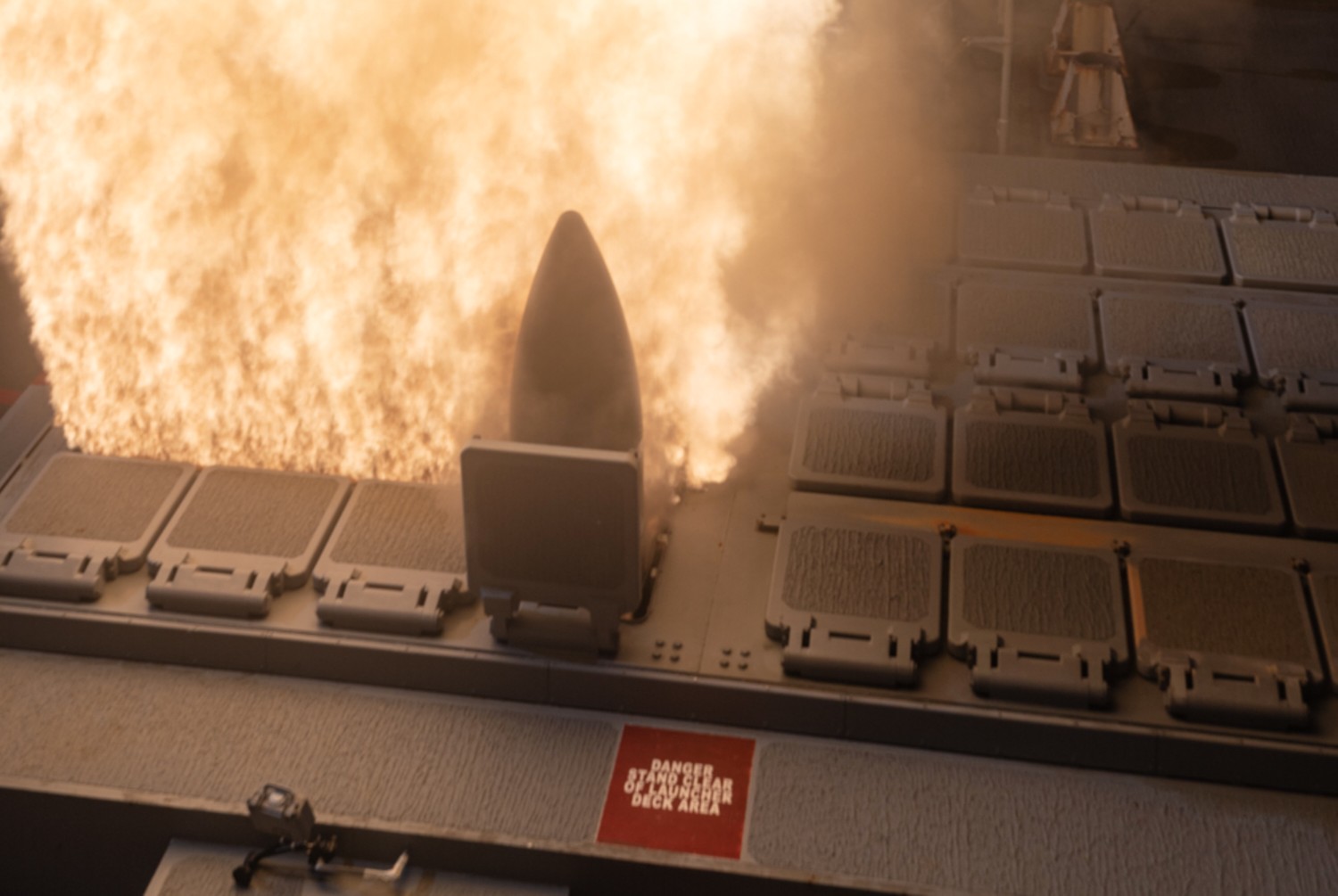
The US awarded Raytheon a $22.9 billion deal on August 17 to sharply boost Tomahawk cruise missile production — one of the largest munitions contracts in recent memory.
Days earlier, the Pentagon signed seven-year framework agreements with Boeing and RTX to expand Standard Missile-3 component production for ballistic missile defence.
Together the awards signal an industrial mobilisation for deep-strike and missile-defence inventories across the Navy and allies.
Munitions Surge: $22.9B Tomahawk Award and Boeing/RTX SM-3 Deals in One Fortnight
The US awarded Raytheon a $22.9 billion deal on August 17 to sharply boost Tomahawk cruise missile production — one of the largest munitions contracts in recent memory.
Days earlier, the Pentagon signed seven-year framework agreements with Boeing and RTX to expand Standard Missile-3 component production for ballistic missile defence.
Together the awards signal an industrial mobilisation for deep-strike and missile-defence inventories across the Navy and allies.
Full Story
The $22.9 billion Raytheon award, reported August 17, 2026, funds a multi-year expansion of Tomahawk production — the interceptor-adjacent deep-strike weapon that naval planners view as central to distributed maritime operations and magazine-depth concerns in the Pacific.
The previous week, the Pentagon had concluded framework agreements with Boeing and RTX to scale SM-3 component manufacturing over seven years. The SM-3 is the cornerstone of sea-based ballistic missile defence for the US and allied navies, and component throughput — not final assembly — has been the binding constraint on delivery rates.
Read together, the awards show the Pentagon using multi-year commitments to pull investment through the defence industrial base: locking suppliers with demand certainty instead of year-to-year procurement. For primes and sub-tier suppliers alike, it converts capacity bets into bankable orders — the same playbook that reshaped artillery and air-defence production after 2022.
Sources
- Defense News
- US Department of Defense
- Raytheon (RTX)
- Boeing
 Defense · Programs · August 5, 2026
CBO: Trump-Class Battleship Program Will Cost $275 Billion
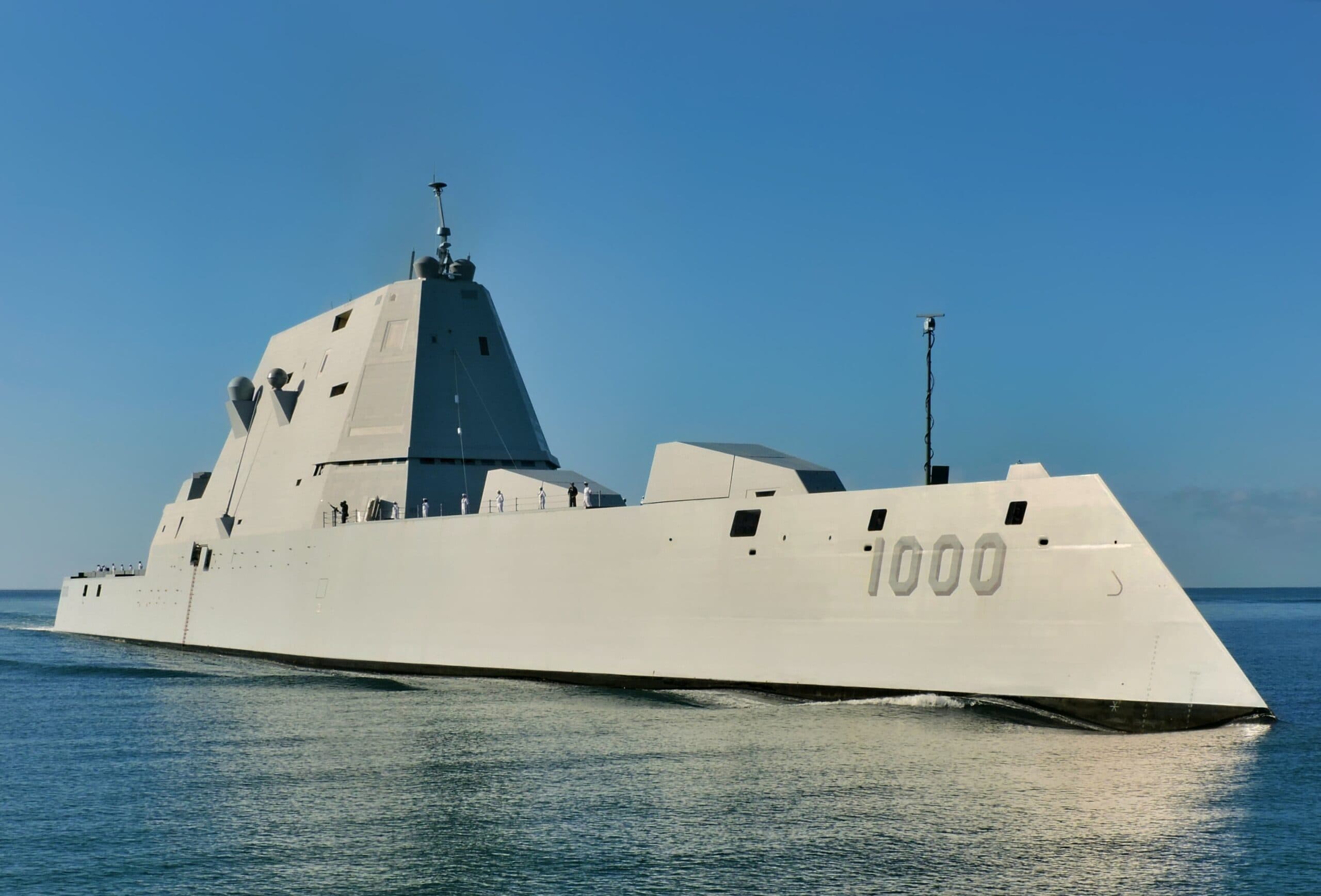
The Congressional Budget Office estimated on August 5 that the Navy's Trump-class battleship programme will cost $275 billion — a figure that rekindles the debate over the fleet's future composition.
The programme revives the large-surface-combatant concept with heavy missile armament, intended to add firepower and presence that the destroyer fleet cannot economically provide.
The CBO score forces Congress to weigh the battleship against competing investments in submarines, unmanned vessels, and munitions.
CBO: Trump-Class Battleship Program Will Cost $275 Billion
The Congressional Budget Office estimated on August 5 that the Navy's Trump-class battleship programme will cost $275 billion — a figure that rekindles the debate over the fleet's future composition.
The programme revives the large-surface-combatant concept with heavy missile armament, intended to add firepower and presence that the destroyer fleet cannot economically provide.
The CBO score forces Congress to weigh the battleship against competing investments in submarines, unmanned vessels, and munitions.
Full Story
The CBO's August 5 estimate put the Trump-class battleship programme's total cost at $275 billion, encompassing design, construction, and the lengthy lead items — weapons, sensors, and nuclear-adjacent support infrastructure — that such large hulls require.
The battleship concept envisions a big-deck surface combatant packing very large missile capacity, restoring the offensive mass that the Navy has said it lacks as magazine depth becomes a defining constraint in modern naval warfare. Supporters argue distributed smaller ships cannot absorb losses or deliver sustained fires the way large armoured hulls can.
Critics — and the CBO score arms them — counter that the same $275 billion buys hundreds of autonomous vessels, a substantial submarine increment, or the munitions stockpile the fleet would actually expend in a contingency. The number now anchors the House and Navy's autumn budget negotiations, with shipbuilding industrial capacity as the other forcing function: yards are already saturated with destroyer and submarine work.
Sources
- Defense News
- Congressional Budget Office
- US Navy
 Defense · Autonomous · August 2026
Saab Unveils Loyal Wingman Concept for the Swedish Air Force
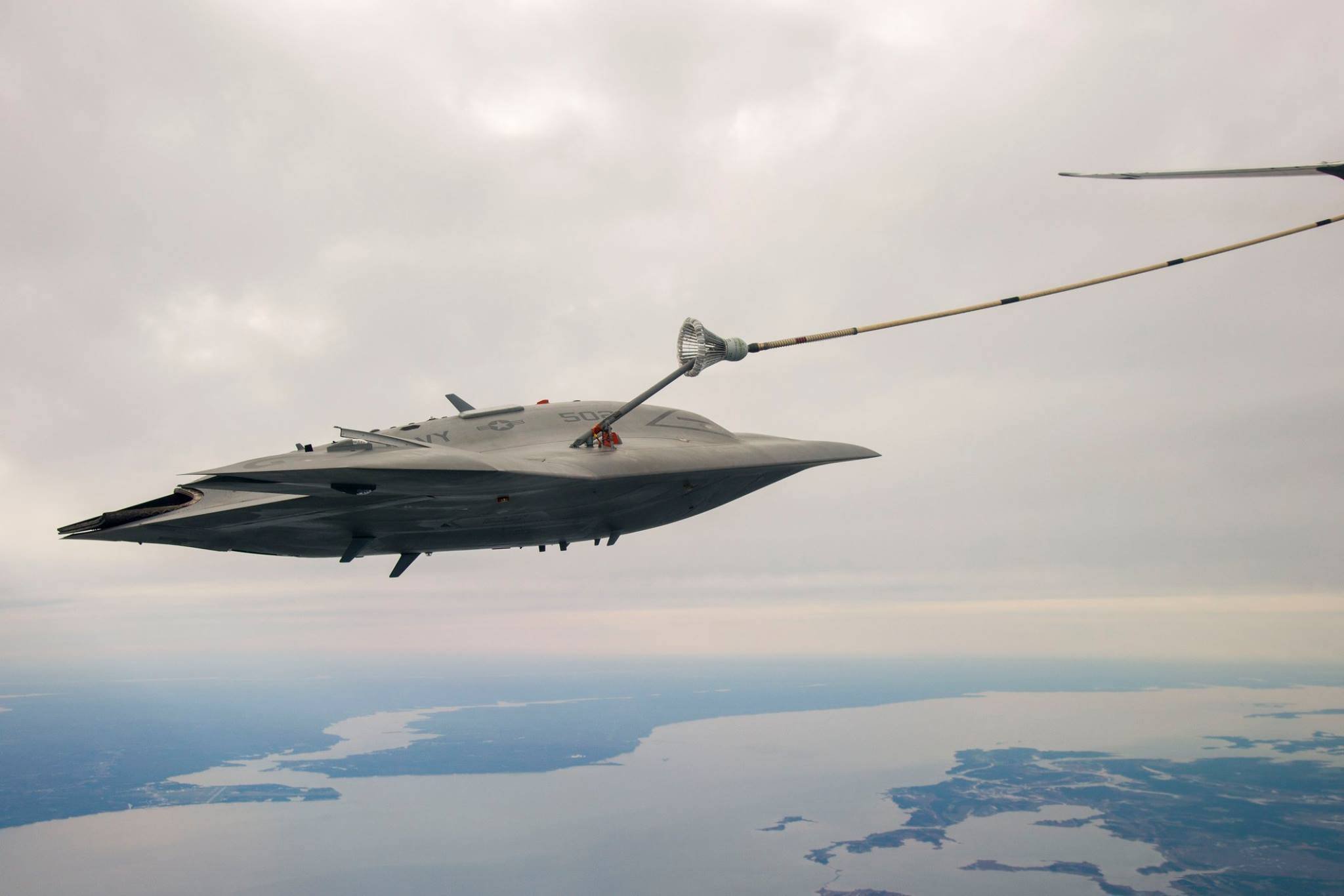
Saab showed off a loyal-wingman unmanned aircraft it hopes to offer the Swedish Air Force, joining Europe's accelerating race for autonomous combat teammates.
The concept slots into Sweden's Gripen-centred air power model — and arrives as the service marks its centenary and deepens NATO integration.
Europe's loyal-wingman field is filling fast following the FCAS collapse, with national programmes multiplying ahead of any common framework.
Saab Unveils Loyal Wingman Concept for the Swedish Air Force
Saab showed off a loyal-wingman unmanned aircraft it hopes to offer the Swedish Air Force, joining Europe's accelerating race for autonomous combat teammates.
The concept slots into Sweden's Gripen-centred air power model — and arrives as the service marks its centenary and deepens NATO integration.
Europe's loyal-wingman field is filling fast following the FCAS collapse, with national programmes multiplying ahead of any common framework.
Full Story
Unveiled in August 2026 alongside Swedish Air Force centenary events, Saab's loyal-wingman concept is a stealthy unmanned combat aircraft designed to fly alongside Gripen E fighters — carrying sensors, electronic warfare payloads, and weapons to extend the manned fighter's reach and survivability.
For Sweden, the timing is deliberate. As a new NATO member anchoring the alliance's northern flank, Stockholm is investing in affordable mass: unmanned teammates offer combat capability at fractions of manned-fighter cost, a philosophy Saab has championed through Gripen's own operating-economics pitch.
The European context is crowded and fluid. With the Franco-German FCAS scrapped in June, national and binational loyal-wingman efforts are proliferating — the UK-Japan-Italy GCAP strand, France's post-FCAS path, and now Saab's Swedish offering. The US Air Force's June production award to General Atomics and Anduril set the global pace; Europe's answer is emerging as a portfolio of interoperable national programmes rather than a single unified system.
Sources
- Defense News
- Saab
- Breaking Defense
Robotics & AI
 AI · Agents · August 18, 2026
Anthropic Rolls Claude Cowork to All Paid Accounts as Agentic AI Goes Mainstream
Anthropic rolled out Claude Cowork to all paid accounts on mobile and web, pairing the release with expanded Google Workspace connectors — Gmail sending and Google Drive file management.
The product turns Claude from a chat interface into an always-available work agent embedded in the tools knowledge workers already use.
The launch extends the agentic-AI trend that has defined 2026: frontier labs shipping products that execute multi-step work rather than merely answer questions.
Anthropic Rolls Claude Cowork to All Paid Accounts as Agentic AI Goes Mainstream
Anthropic rolled out Claude Cowork to all paid accounts on mobile and web, pairing the release with expanded Google Workspace connectors — Gmail sending and Google Drive file management.
The product turns Claude from a chat interface into an always-available work agent embedded in the tools knowledge workers already use.
The launch extends the agentic-AI trend that has defined 2026: frontier labs shipping products that execute multi-step work rather than merely answer questions.
Full Story
Claude Cowork, made generally available to all paid tiers on August 18, is Anthropic's most consumer-shaped expression of its agentic strategy: a persistent assistant that can read and act across a user's workspace — now including sending Gmail messages and managing Google Drive files via newly expanded connectors.
The release follows a year of agentic milestones from the company — Opus-tier models optimised for long-running agents, an expanding enterprise partnership with Cognizant, and the July Opus 5 launch — and lands amid intense competition: Google's Gemini integrations and OpenAI's agent products are converging on the same office-work battleground.
The strategic significance is distribution: by embedding in email and file workflows across mobile and desktop, frontier AI stops being a destination users visit and becomes a layer inside daily work. Enterprise buyers — including aerospace and defence organisations evaluating agentic MRO and CAMO automation — now have reference points for what governed, connector-based agents look like at scale.
Sources
- Anthropic News
- The Verge
- CNBC
 AI · Distribution · August 18, 2026
Gemini Arrives in Chrome on Android — and Google Buys Spirit's Data for AI Training
Google launched Gemini in Chrome for all Android users in the United States on August 18, embedding frontier AI directly into the world's most-used mobile browser.
The same day, reporting revealed Google's $10 million purchase of Spirit Airlines' business data — an AI-training trove acquired from the liquidating carrier.
Together the moves show Google playing both sides of the AI economy: unprecedented consumer distribution, and aggressive acquisition of proprietary training data.
Gemini Arrives in Chrome on Android — and Google Buys Spirit's Data for AI Training
Google launched Gemini in Chrome for all Android users in the United States on August 18, embedding frontier AI directly into the world's most-used mobile browser.
The same day, reporting revealed Google's $10 million purchase of Spirit Airlines' business data — an AI-training trove acquired from the liquidating carrier.
Together the moves show Google playing both sides of the AI economy: unprecedented consumer distribution, and aggressive acquisition of proprietary training data.
Full Story
Gemini's integration into Chrome for Android — rolled out to all US users on August 18 — places a frontier assistant one tap away from every page, search, and form factor the browser touches. It is arguably the largest single-step distribution of generative AI to consumers to date, and it advances Google's strategy of making Gemini ambient across Search, Android, and Workspace.
The $10 million Spirit Airlines data purchase, reported the same week, is the quieter but equally telling move: as the ULCC liquidates in Chapter 7, its operational, pricing, and network data becomes an AI-training asset — purchased not by an airline, but by a frontier lab. The transaction previews a market where defunct companies' data estates are valued primarily as model fuel.
For the aerospace industry, the implications run both directions. Consumer-scale AI normalises assistant-mediated work for passengers and operations staff alike, while data transactions like Spirit's underline how operational knowledge — schedules, maintenance, crew — is becoming a strategic commodity that airlines must govern deliberately, especially under evolving privacy and competition rules.
Sources
- The Verge
- CNBC
 AI · M&A · August 19, 2026
Stripe to Acquire OpenRouter for $7.5 Billion — AI Gateways Become Infrastructure
Payments giant Stripe agreed to acquire OpenRouter, the popular AI model gateway, for $7.5 billion — one of the year's largest AI-infrastructure deals.
OpenRouter's unified API routes requests across dozens of frontier models; under Stripe it becomes the transaction layer for metered AI commerce.
The deal signals that AI consumption is being financialised: model calls are becoming billable, routed, and arbitraged like payment traffic.
Stripe to Acquire OpenRouter for $7.5 Billion — AI Gateways Become Infrastructure
Payments giant Stripe agreed to acquire OpenRouter, the popular AI model gateway, for $7.5 billion — one of the year's largest AI-infrastructure deals.
OpenRouter's unified API routes requests across dozens of frontier models; under Stripe it becomes the transaction layer for metered AI commerce.
The deal signals that AI consumption is being financialised: model calls are becoming billable, routed, and arbitraged like payment traffic.
Full Story
Announced August 19, 2026, the $7.5 billion acquisition brings OpenRouter — the gateway through which developers access multiple frontier models behind a single API — into Stripe's payments empire. The strategic logic is exact: AI usage is metered, high-volume, and price-sensitive, the same shape of traffic Stripe spent two decades industrialising for internet commerce.
For developers, OpenRouter's value is neutrality — routing to whichever model offers the best cost-performance for a given task, with failover across providers. That neutrality question now becomes the deal's central controversy: whether a payments incumbent controlling the dominant gateway will tilt the competitive field among model providers.
The acquisition caps a period in which the AI stack's middle layers — gateways, orchestration, evals — have become acquisition targets faster than the models themselves. As agentic products multiply, commerce in AI is converging with commerce in everything else; Stripe has moved to own the toll booth.
Sources
- The Verge
- Stripe
- OpenRouter
- TechCrunch
 AI · Hardware · August 22, 2026
Nvidia Raises AI Chip Prices Above 15% — Compute Becomes the Contested Resource
Nvidia raised prices on its AI accelerators by more than 15% in August, citing demand that continues to outrun supply across every customer class.
The increase ripples through the entire AI economy — from cloud providers' margins to enterprise AI budgets and the training plans of frontier labs.
Compute inflation is now a strategic variable: access to silicon is shaping which nations, companies, and research teams can compete at the frontier.
Nvidia Raises AI Chip Prices Above 15% — Compute Becomes the Contested Resource
Nvidia raised prices on its AI accelerators by more than 15% in August, citing demand that continues to outrun supply across every customer class.
The increase ripples through the entire AI economy — from cloud providers' margins to enterprise AI budgets and the training plans of frontier labs.
Compute inflation is now a strategic variable: access to silicon is shaping which nations, companies, and research teams can compete at the frontier.
Full Story
Reports on August 22, 2026 confirmed Nvidia had pushed through price increases above 15% on its AI accelerator lineup — a move that would be routine inflation in any other hardware market, but which lands in an economy where AI compute is the binding constraint on growth.
The mechanics favour Nvidia: hyperscalers and frontier labs are committed to multi-year capacity plans, sovereign AI programmes in Europe, the Gulf, and Asia are adding state-backed demand, and no second supplier can yet match the installed CUDA software base at scale. Price, in that structure, is simply rationing.
The consequences cascade. Cloud AI margins compress or pass through to customers; startups price compute into every unit economics model; and the aerospace-defence sector — now dependent on AI for everything from MRO agents to CCA autonomy — faces the same cost curve in certified, air-gapped deployments. Expect compute economics to appear explicitly in national AI strategies and defence procurement plans through the autumn budget cycle.
Sources
- The Verge
- Reuters
- Nvidia
All stories above are based on reporting from primary news outlets during August 2026. Source attributions are listed in the expanded detail for each story.